Every Korean family has its own kimchi stew. Ours has fish sauce in it.
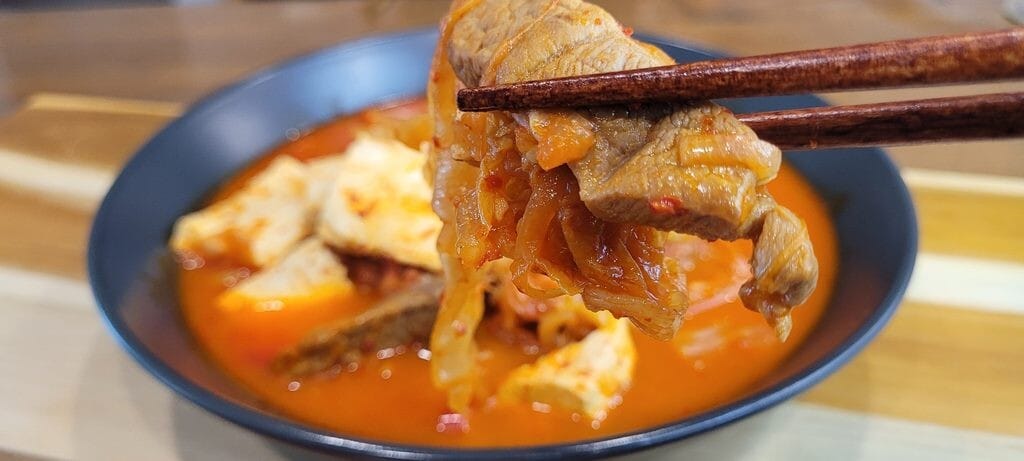
That surprises people, so let’s deal with it first. Kimchi jjigae — say it KIM-chee JJI-gae — is the dish Koreans make when the kimchi in the fridge has gone sour. It is the most everyday hot dish in the country. And the version we’ve settled on after years of adjusting comes down to two decisions that most recipes skip.
The first thing: fish sauce, for the pork
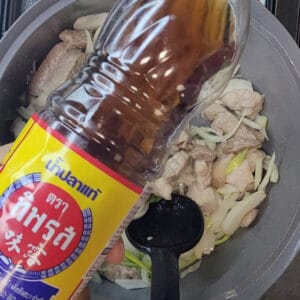
Pork has a smell. Korean cooks call it jatnae (잡내) — the barnyard note that sits underneath cheap pork and gets stronger the longer it cooks. Most recipes attack it with soju, ginger, or coffee. We use a tablespoon of fish sauce, stirred into the pork while it’s still frying, before any water goes in.

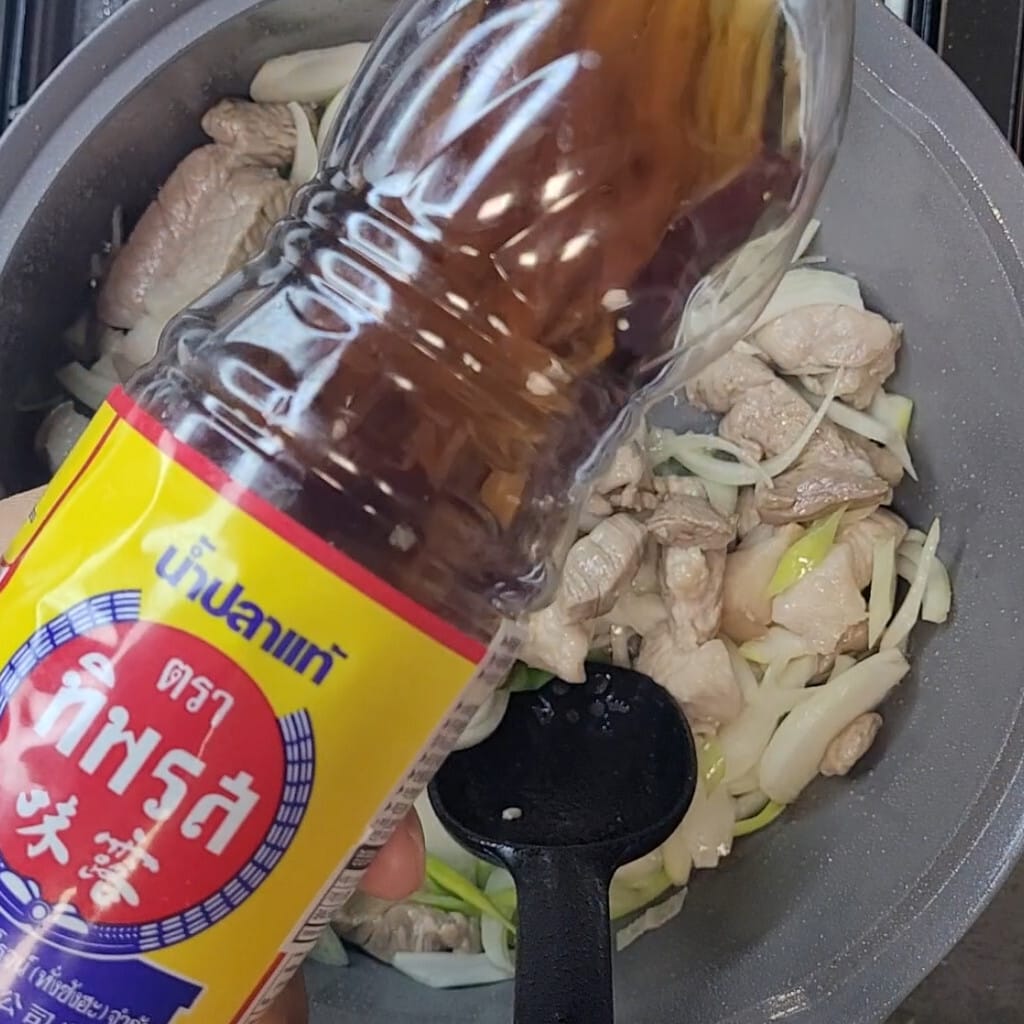
It does two things at once. The salt and the fermented funk cancel the pork smell instead of covering it, and the same spoonful adds savoriness that water can’t.
If this feels un-Korean, it isn’t. Kimchi itself is made with fish sauce — Korean cooks salt cabbage with anchovy or salted shrimp brine, and that’s a large part of why kimchi tastes the way it does. Putting a spoon of it back into the pot is the same flavor family, not a foreign guest.
We use Thai nam pla because there’s always a bottle in the house. Korean anchovy sauce (myeolchi-aekjeot) works identically. Vietnamese nuoc mam works. Use whatever you have.
The second thing: two seasoning powders, not one
Here is the part English-language Korean recipes tend to leave out.

Korean home kitchens use seasoning powder. Not occasionally — routinely. Dasida (다시다) is the Korean beef-and-vegetable seasoning that has been in the cupboard of most Korean households for forty years. Hondashi is the Japanese bonito-based one. Both are in the international aisle of any decent Asian market, and both are, yes, MSG-based.
Most recipes written in English quietly replace them with “homemade anchovy stock” because it sounds better. What actually happens in Korean homes is a half spoon of dasida.
We use both, and the reason is that they don’t taste the same. Dasida is beef and root vegetable — it goes down and sits under the pork. Hondashi is dried fish — it goes up and lifts the broth. One on its own makes a stew that’s savory in one direction. Together, the broth has a floor and a ceiling.
The amounts are small on purpose. 1 teaspoon of dasida, ¾ teaspoon of hondashi. This is seasoning, not the base. The base is the kimchi.
You need sour kimchi
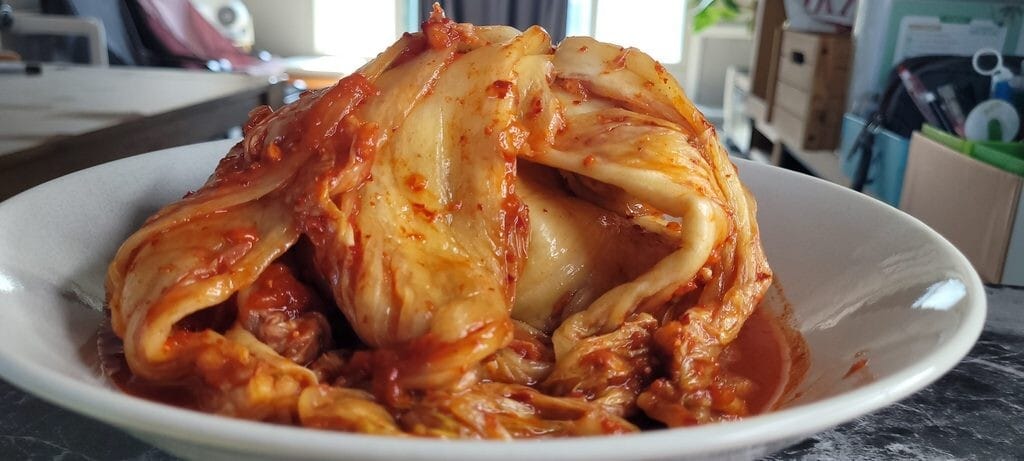
This matters more than anything else on the list.
Fresh kimchi makes a thin, sharp stew that tastes like hot salad. Kimchi that has been in the fridge for three weeks or longer has turned properly sour, the cabbage has gone soft, and the sourness is what gives the broth its spine.
If you have a jar that’s gone sour and you assumed you’d ruined it — this is the dish it was waiting for. We wrote about the three stages of kimchi separately, and this is stage two and three put to work.
No sour kimchi and no time? Add a splash of the kimchi brine from the container, and a small spoon of vinegar at the end. It is not the same. It is close enough for a weeknight.
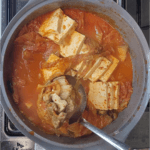
Kimchi Jjigae (Korean Kimchi Stew)
Ingredients
The pot
- 400 g pork shoulder cut into bite-size pieces
- 1 kg sour kimchi half a whole-cabbage head, cut into 4 cm pieces
- 1/2 onion sliced
- 1 large scallion sliced (use half now, half at the end)
- 1 L water
The seasoning
- 2 tsp fish sauce nam pla, or Korean myeolchi-aekjeot
- 2 Tbsp gochugaru Korean chili flakes, heaped
- 1 Tbsp sugar heaped
- 1 Tbsp minced garlic heaped
- 1 tsp dasida Korean beef seasoning
- 3/4 tsp hondashi
Added at the end
- 300 g firm tofu sliced 1.5 cm thick
- 2 Cheongyang chilies sliced on the diagonal (serrano works)
Instructions
- Put the pork in a dry pot over medium heat. No oil. Fry until the edges brown and fat has rendered into the bottom of the pot.

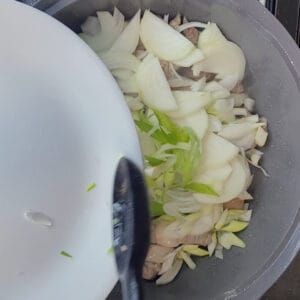
- Add the onion and half the scallion. Keep frying — not a quick sweat. Go until the onion is soft, starting to colour, and the pot smells sweet. Most of this stew’s flavour is built here, before any liquid.
- Add the fish sauce straight onto the hot pork. It will hiss. Stir it through and let it cook off. This is the step that takes the pork smell out.
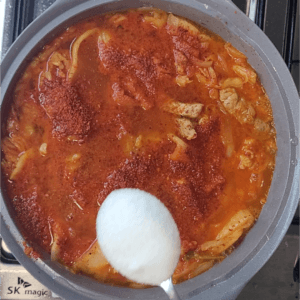
- Add the kimchi and turn it through the fat for a minute. Then add the water and all of the seasoning at once — gochugaru, sugar, garlic, dasida, hondashi. Stir until nothing is floating on the surface.
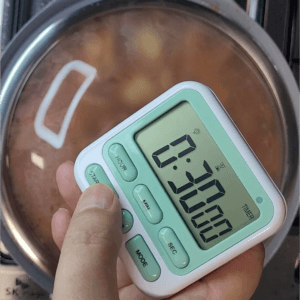
- Lid on. Medium-low for 30 minutes. Steady movement, not a hard boil.
- Add the tofu, the chilies and the rest of the scallion. Lid on, 5 minutes more. The chilies go in late so they stay sharp.
- Serve from the pot, with short-grain rice.