
Americans usually meet Korean soup through two dishes: the silky tofu one and the kimchi one.
Korean spicy beef soup is the third, and it’s the one Koreans reach for when they want something restorative rather than sharp. No tofu, no kimchi, no gochujang. Just beef, a lot of scallion, and chili powder bloomed in oil until the broth turns deep red.
It’s called yukgaejang — say it “yuk-geh-JANG.”

Where Koreans actually eat this
Here’s the part that surprises people.
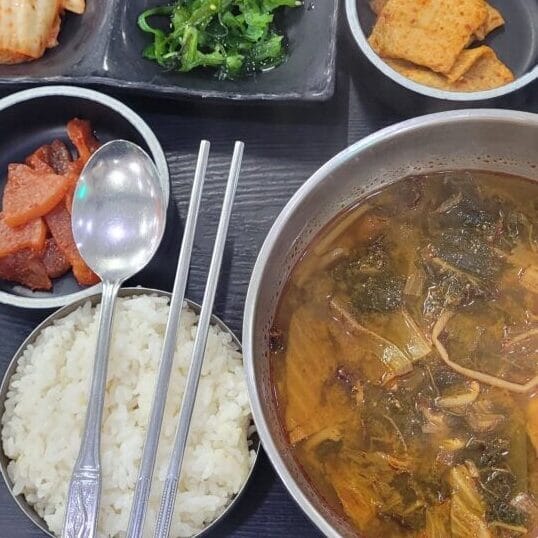
In Korea, this is the soup served at funerals. Every funeral hall has a dining room, and what comes out, for three days, to everyone who visits, is yukgaejang with rice and a few side dishes. It feeds a crowd, holds well in a big pot, and doesn’t need anyone’s attention.
That isn’t a grim association for Koreans. It’s closer to how a casserole works in the American South — the food that shows up when people need feeding and nobody has the energy to cook. Yukgaejang carries that weight, and it’s also just a Tuesday soup.
What makes it red
This is the step that separates a good yukgaejang from a watery one, and it’s the part most recipes skip past.
You don’t stir chili powder into broth. You fry it in oil first.
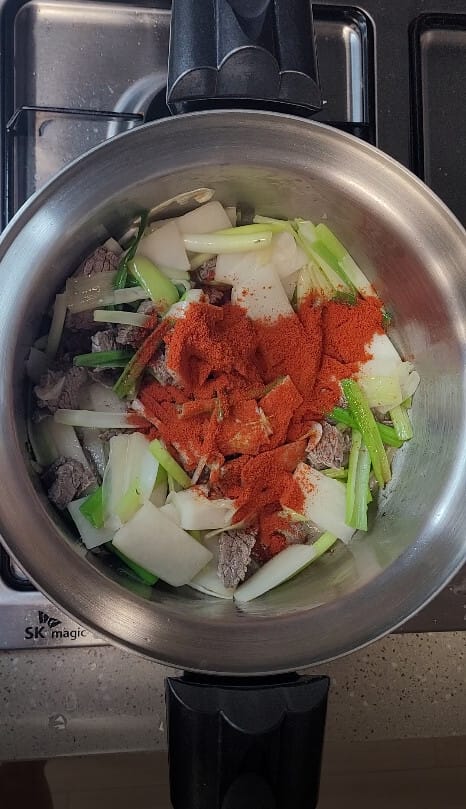
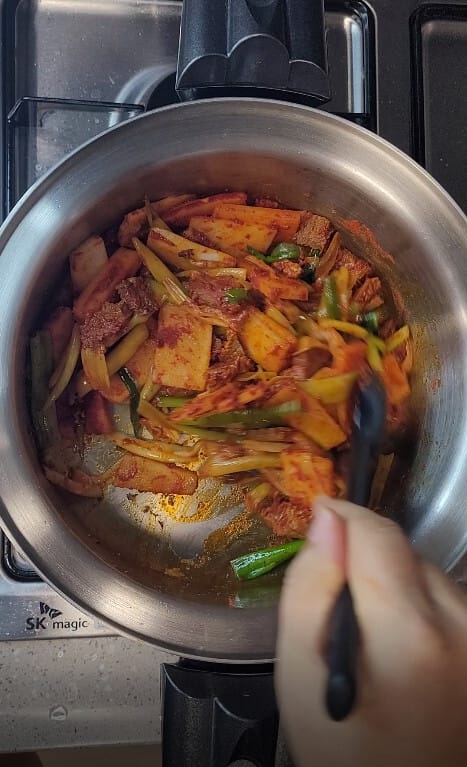
Scallion and radish go into a mix of cooking oil and sesame oil. Then the beef. Then four tablespoons of fine gochugaru go in while the pot is still dry and hot, and you keep it moving until the oil turns red and glossy and smells toasted rather than raw.
That red oil is the broth. Everything after it is dilution. If you add liquid before the chili has bloomed, you get a soup that’s red in color and thin in taste, and no amount of simmering fixes it.
Fine gochugaru, not coarse. Coarse flakes sit in the oil and scorch before they release color. The fine grind dissolves into it.
The beef, before anything else
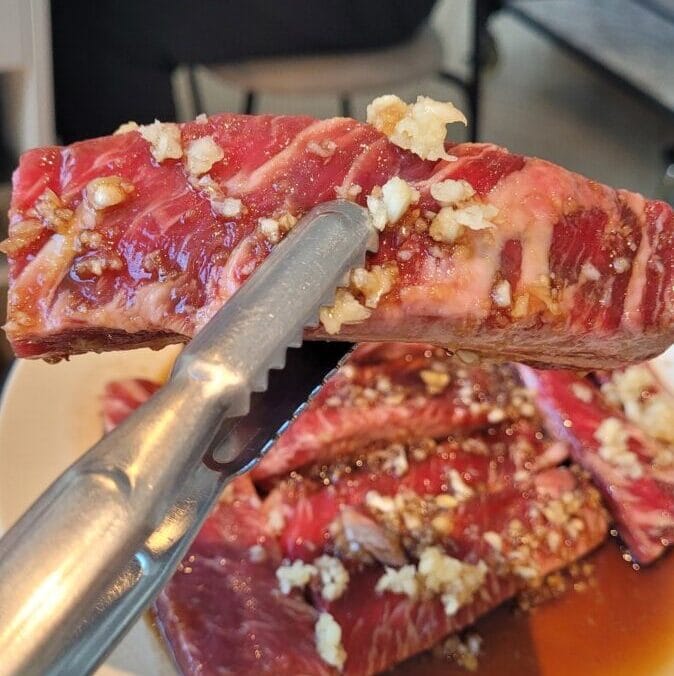
Brisket goes into cold water for an hour before you cook it.
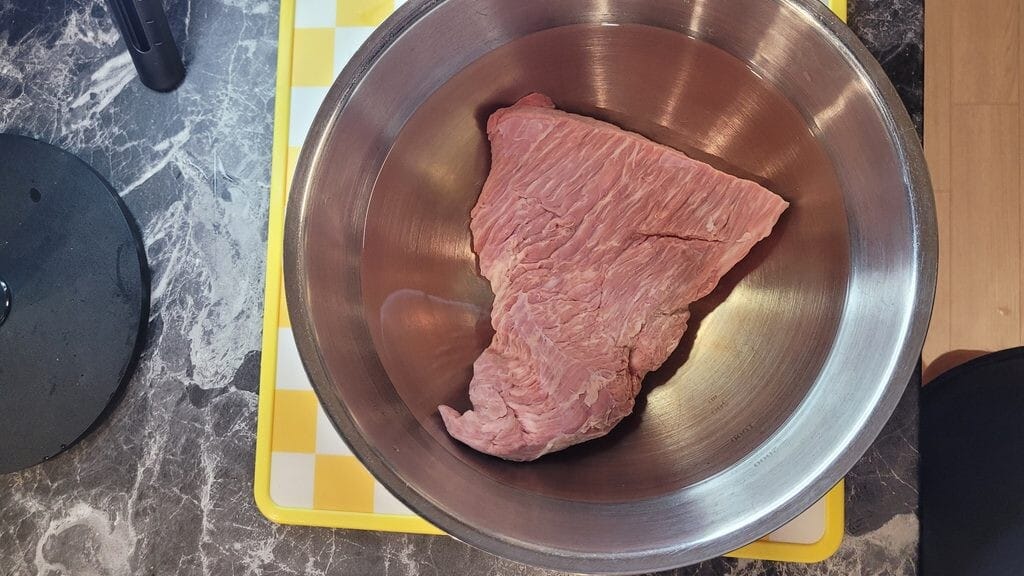
This pulls out the blood, and blood left in beef is what makes a broth cloudy and gives it that heavy, barnyard smell Koreans call jabnae. Then it gets a ten-minute blanch in boiling water, which lifts off the rest of the scum.
Two steps for one ingredient feels excessive. It is the difference between a clear red broth and a murky one.
After it cools, tear the beef along the grain instead of slicing it. Yukgaejang is a soup of long strands — beef, scallion, fern, sprouts — and sliced beef breaks that texture. Your hands do this better than a knife.
Shopping notes for the US
Beef brisket is the cut. Flat-cut brisket from any supermarket works. Chuck is an acceptable substitute; it shreds well, though it’s fattier.
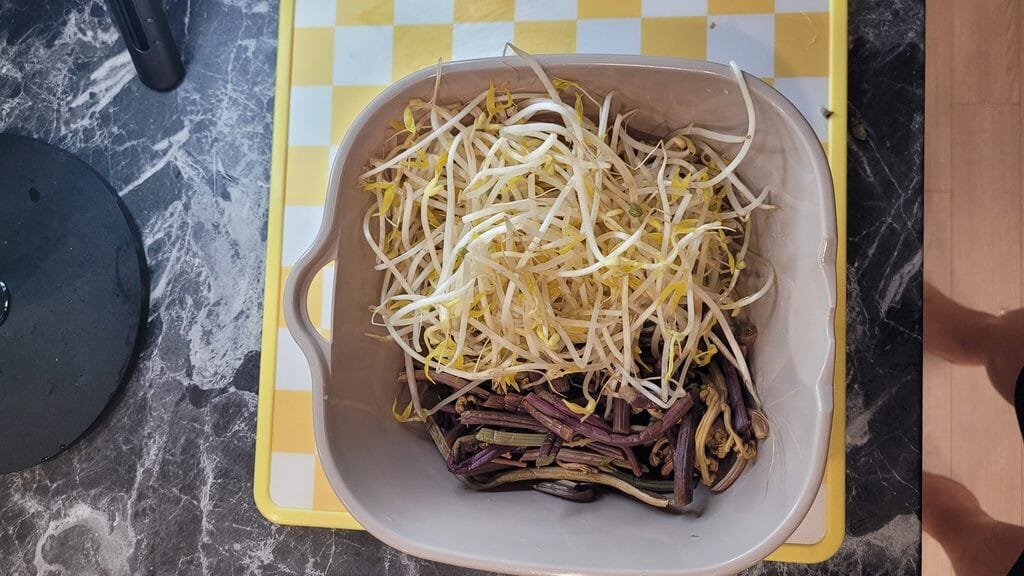
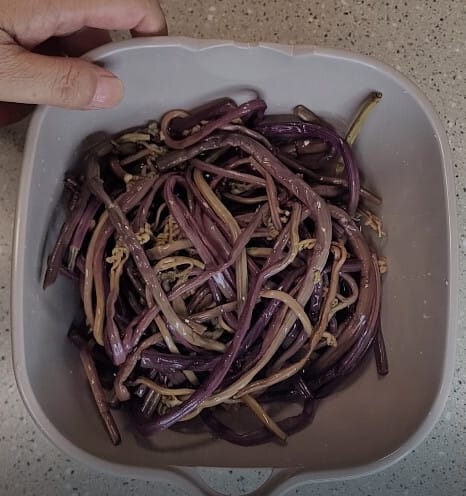
Gosari (fernbrake, bracken fern) is the one ingredient without a real replacement, and the one to be careful buying. Korean markets sell it dried or already parboiled and frozen — those are the two forms you want. Dried gosari needs an overnight soak and a boil; the frozen kind needs three minutes in boiling water. Never use it raw or unprocessed. Bracken is always cooked before eating in Korea, and the drying-and-boiling steps are part of why. If you can’t find it, the soup still works — it will taste lighter and less earthy.
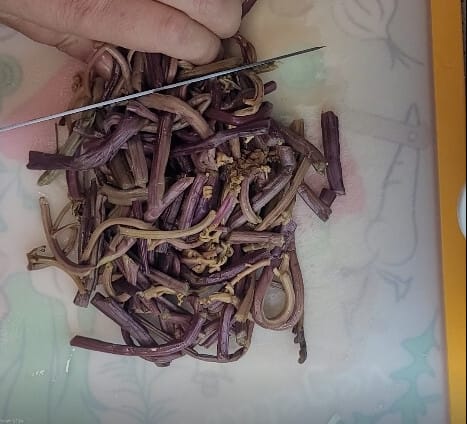
Daepa, Korean scallion, is thicker than an American scallion and closer to a small leek. Three stalks is a lot of allium, and that’s intentional. Substitute one leek plus four regular scallions.
Korean radish (mu) is squat and dense. Daikon is the everyday substitute and behaves nearly the same in soup.
Fish sauce is the easy one. The original recipe uses nam pla, Thai fish sauce, and that’s sold in every large American supermarket. It goes in for savoriness, not fish flavor — three spoonfuls disappearing into ten cups of broth leaves no trace of itself.
Guk-ganjang (soup soy sauce) is saltier and lighter in color than regular soy sauce. If you don’t have it, use regular soy sauce at two-thirds the amount plus a pinch of salt.
Beef broth instead of the Korean packet. Korean cooks often start with a carton of gomtang bone broth. Nothing like it exists in American supermarkets, so this version uses store-bought low-sodium beef broth for the whole liquid. It gets to the same place.
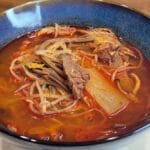
Korean Spicy Beef Soup (Yukgaejang)
Equipment
- 1 Large pot at least 4 quarts / 4 L
Ingredients
For the soup
- 10 oz beef brisket 300g — chuck also works
- 9 oz gosari 250g fernbrake — see the post; buy dried or pre-boiled
- 7 oz Korean radish 250g — daikon works
- 3 stalks Korean scallion daepa, about 200g — or 1 leek plus 4 scallions
- 7 oz mung bean sprouts
- 5 oz oyster mushrooms torn
- 10.5 cups beef broth 2.5 L
For the chili oil base
- 2 tbsp cooking oil
- 2 tbsp sesame oil
- 4 tbsp gochugaru soup soy sauce — or 2 Tbsp regular soy sauce plus a pinch of salt
For seasoning
- 3 tbsp guk-ganjang
- 2 tbsp fish sauce nam pla
- 2 tbsp garlic minced
- 2 tsp Dasida Korean beef seasoning — or 1 tsp beef bouillon powder, or skip
Instructions
- Soak the brisket in cold water for 1 hour to draw out the blood. Change the water once if it goes dark.
- While it soaks, prepare the vegetables. Cut the radish into thin squares about as wide as your index finger. Cut the scallion into finger lengths and split each piece lengthwise. Tear the oyster mushrooms into strips. Boil the gosari for 3 minutes and drain.
- Drain the brisket and blanch it in boiling water for 10 minutes, skimming the foam. Lift it out and let it cool enough to handle.
- Tear the beef along the grain into strips. Don’t slice it.
- Heat the cooking oil and sesame oil in a large pot. Add the scallion and radish and fry until the scallion softens and smells sweet.
- Add the torn beef and keep frying for another 2 minutes.
- Add the gochugaru and keep it moving. The oil should turn deep red and glossy and start to smell toasted, not raw. This takes about a minute and it is the most important step in the recipe.
- Pour in the beef broth. Add the gosari, guk-ganjang, fish sauce, garlic and Dasida.
- Bring to a boil, then lower to a steady simmer and cook uncovered for 50 minutes. The beef is ready when a strand falls apart under a spoon — start checking at 40 minutes.
- Add the mung bean sprouts and oyster mushrooms. Simmer 10 minutes more, no longer. They are here for texture, and they lose it if you overcook them.
- Serve in deep bowls with short-grain rice and kimchi.
Notes
If you have a pressure cooker
This recipe is written for a regular pot. Koreans often make it in a low-pressure pot, which cuts the simmer to about 30 minutes instead of 50. Everything else stays the same.
How to eat it
With short-grain rice, and the rice goes into the bowl, not beside it. Yukgaejang is a soup you eat with a spoon, alternating broth and rice in the same mouthful, and most Koreans tip the rice in partway through.
Kimchi on the side, and that’s the whole meal.