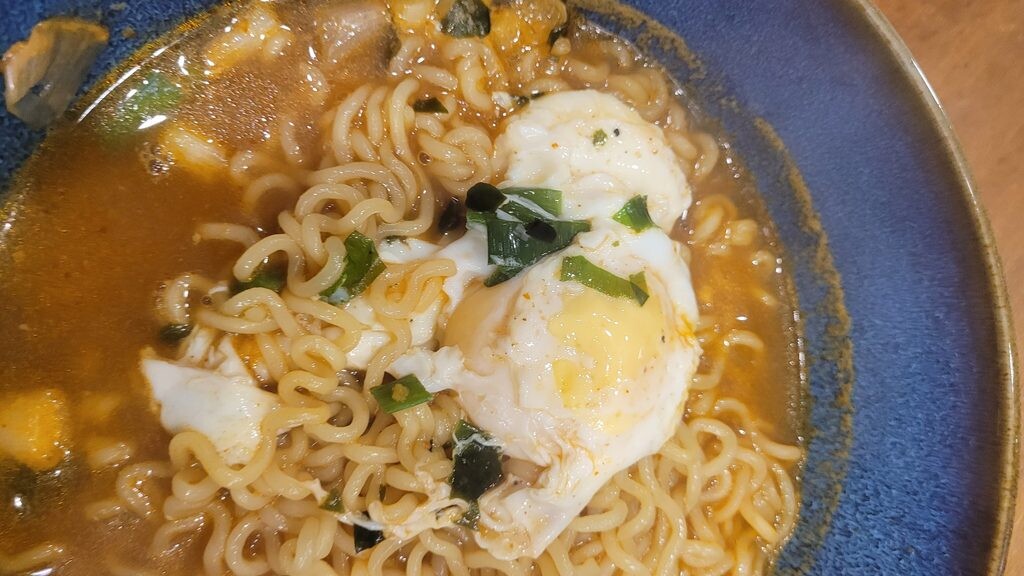
Korean families argue about this. Soup powder first, or noodles first in Korean Ramen
It’s a real argument, it’s been running for decades, and the odd thing is that the answer is printed on the bag — in English, on the packets sold in America — and almost nobody reads it.
So I bought both of the big ones and read the back.
What I found is that the famous argument is about the wrong packet.
There are two soup packets, not one
Every Korean instant ramen packet contains three things: a block of fried noodles, a sachet of powdered seasoning, and a smaller sachet of dried vegetable flakes.
When Koreans argue about “soup first,” they usually talk as if there’s one soup packet. There are two, and the two brands treat them completely differently.
Nongshim and Ottogi both say the powder goes in at or after the boil. On that, they agree.
What they disagree about is the vegetable flakes.
What Korean Ramen Ottogi prints
Jin Ramen, the back of the bag:


- Put the vegetable flakes into 550 ml of water and bring it to a boil.
- Add the powdered soup, then the noodles, and boil 4 minutes more.
- Adjust the powder to taste. Kimchi, scallion and egg go well with it.
So the flakes start in cold water and come up to the boil with it. The reasoning Ottogi gives elsewhere is that the dried vegetables and meat stock need the extra time in water to release into the broth.
Note the third line. The bag itself tells you to add egg and scallion. That isn’t a hack somebody invented online — the manufacturer suggests it.
What Korean Ramen Nongshim prints
Shin Ramyun, the back of the bag:

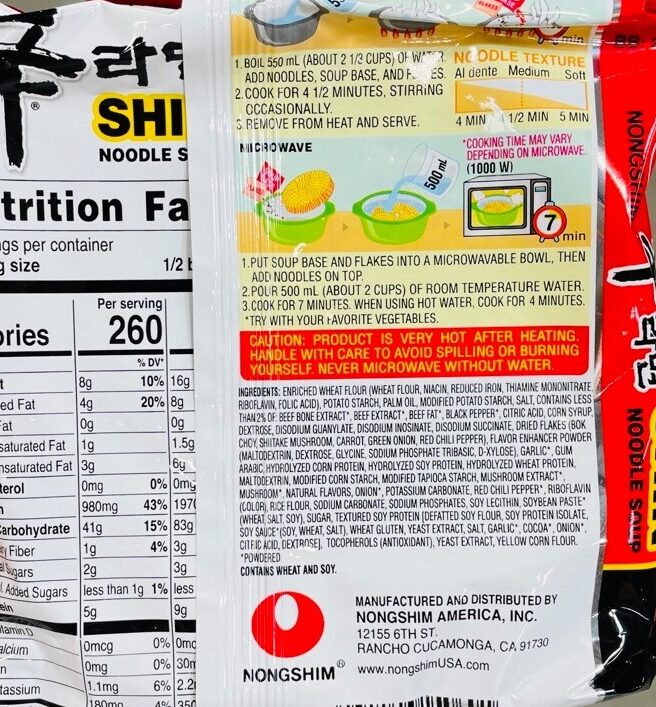
- Boil 550 ml of water. Add the noodles, powdered soup and flakes together.
- Boil 4 minutes 30 seconds.
Everything goes in at once, after the water is boiling. Nothing starts cold.
I checked a second Nongshim product, Ansung Tangmyun, and it says exactly the same thing: boil 550 ml, add noodles and soup together, 4 minutes 30 seconds. This isn’t a quirk of one product. It’s the company’s house method.
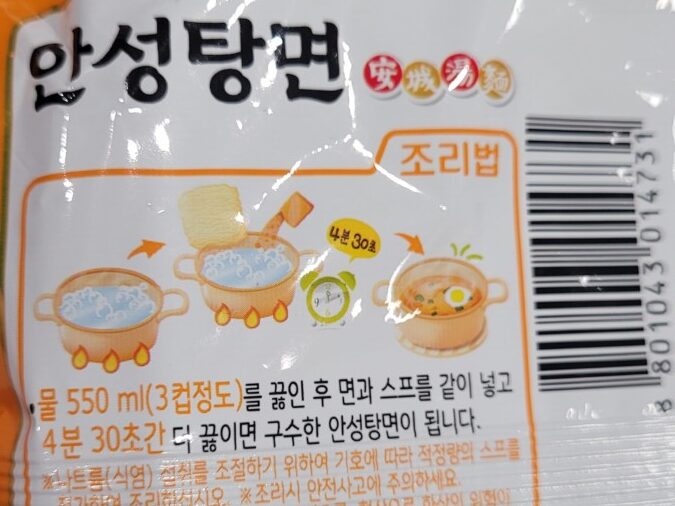
And then, in small type underneath, a line that changes how you read the whole argument:
If you put the soup powder into boiling water first, it can boil over and burn you. Add the noodles first.
Nongshim’s stated reason is safety, not flavour. Powder hitting rolling water foams up and climbs the pot. Put the noodles in first and the surface is broken up enough that it doesn’t.
That same warning is printed on both Nongshim packets I looked at, which tells you it’s a standing company instruction rather than something added to one bag.
It’s a more concrete reason than anything in the flavour debate, and I had never seen it mentioned in English.
The two bags don’t even agree on 550 ml
A small thing that made me laugh.
Both brands specify 550 ml of water. Ottogi writes it as “2¾ cups.” Nongshim writes it as “about 3 cups.”
A Korean measuring cup is 200 ml, so 550 ml is 2.75 cups. One brand gives you the exact figure. The other rounds up and tells you not to worry about it.
The water filter has a 550 ml button
Here is how far this number reaches.
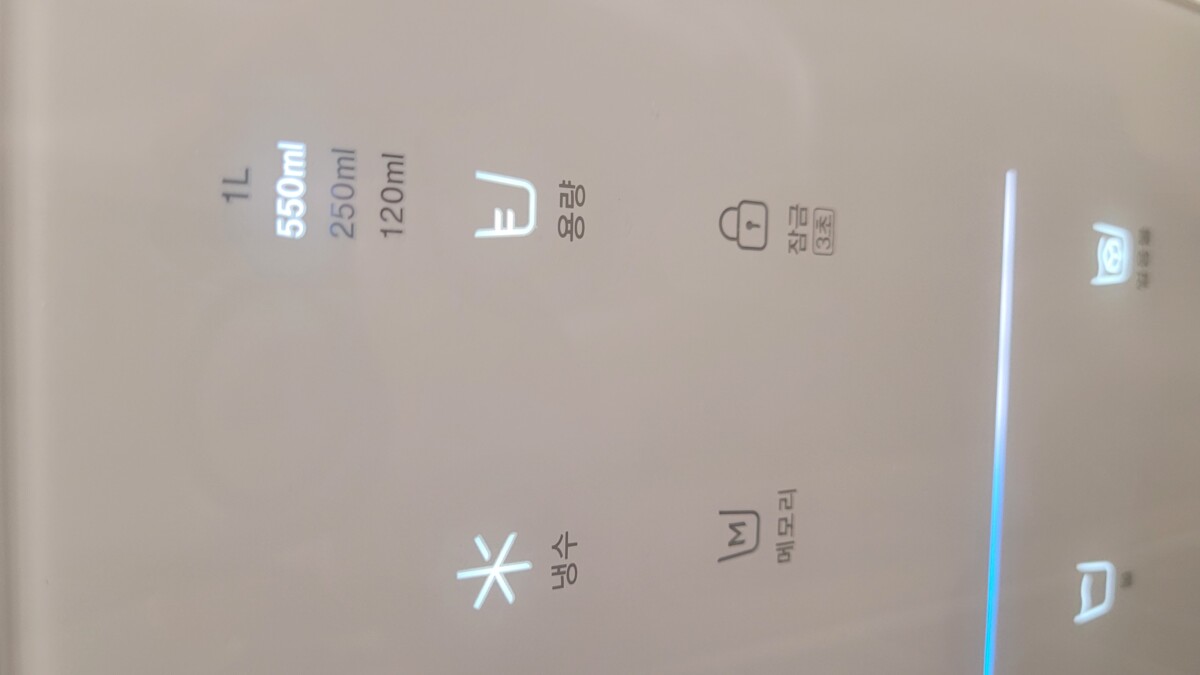
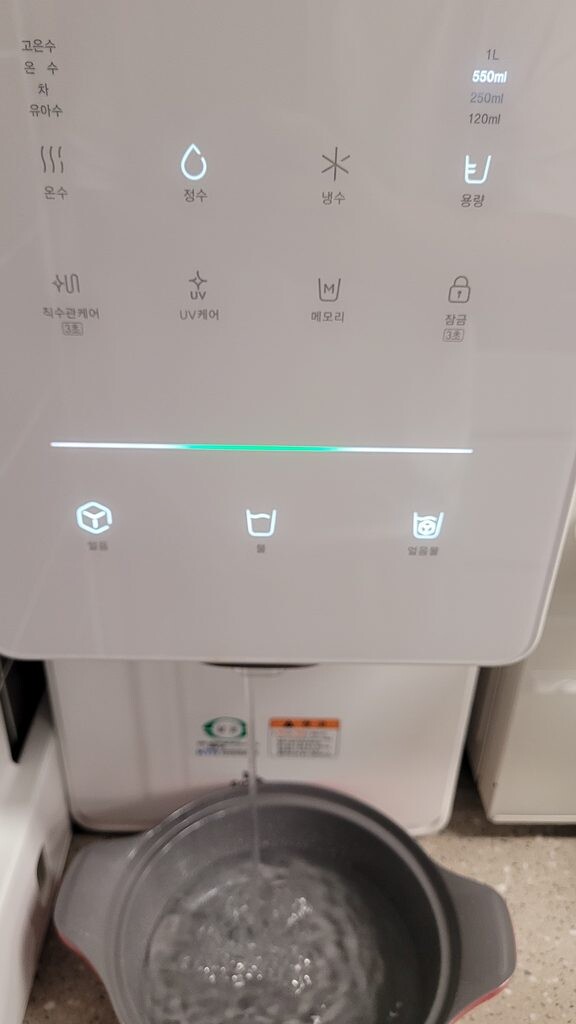
Most Korean homes have a water purifier — a counter-top or floor unit that filters, chills and heats, and dispenses a measured amount at a button press. Ours has four preset volumes.
1 L. 550 ml. 250 ml. 120 ml.
Look at that list again. 250 ml is a glass of water. 120 ml is a baby bottle. 1 litre is a jug.
550 ml is one packet of ramen.
It isn’t a round number. If an engineer were choosing convenient volumes, the third one would be 500. It’s 550 because that is what both Nongshim and Ottogi print on the back of the bag, and because the appliance has to be useful on a Tuesday night.
I press it and it fills the pot exactly. I have never measured ramen water in my life.
This is the kind of thing you stop seeing once you live here. A foreign visitor looks at that button panel and sees four arbitrary numbers. What it actually is, is a national dinner habit, cast in plastic and sold as a kitchen appliance.
How firm do you want the noodles?
The export packet of Shin Ramyun has something the Korean one doesn’t: a printed texture scale.
| Cooking time | |
|---|---|
| Al dente | 4 minutes |
| Medium | 4 min 30 sec |
| Soft | 5 minutes |
Firm noodles are not a trick. They’re a printed option. Koreans call them kkodeul-myeon (꼬들면) — KKOH-deul-myun — and most people who care have a strong opinion. If you’ve only ever cooked ramen to the time on the bag, pull it thirty seconds early once and see.
The 30-second window between al dente and medium is the entire difference, which tells you how little slack there is.
One more label oddity
If you’re buying these in America, look at the nutrition panel. Then compare it to the Korean one.
In Korea, a packet of Shin Ramyun is one thing. 120 g, 500 calories, 1,790 mg of sodium. One packet, one number.
In America, the same product is labelled as 2 servings. 260 calories a serving — which is half a block of noodles.
It’s the same packet. Nobody in Korea eats half of one, and I doubt many people in America do either. The number just looks better cut in two.
Ottogi’s American packet, for what it’s worth, doesn’t do this. Jin Ramen is labelled as 1 serving, 500 calories, and leaves it there.
And then there’s what I actually do
Neither brand tells you to do this. I do it anyway, and the second step is the part worth stealing.
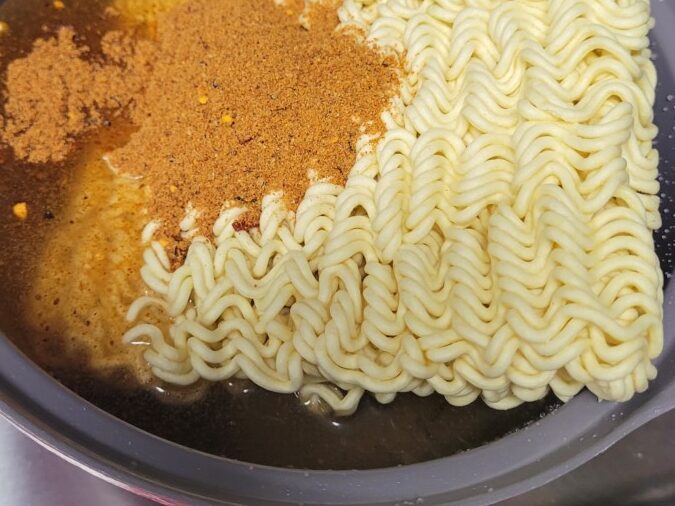
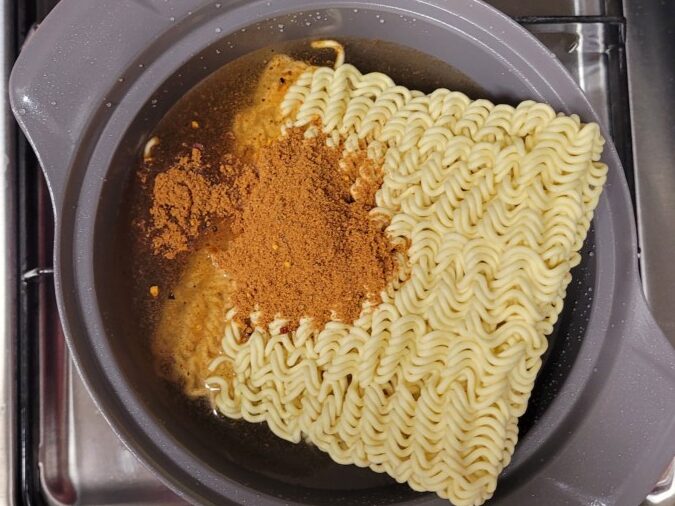
1. Everything into cold water. 550 ml, noodles, powder, flakes, all of it, and bring the pot up to a boil together. I was told it makes the noodles springier, and to me it does — but I haven’t run it against a timer and a control, so take that as a habit rather than a finding.
What I can say for it is that starting cold sidesteps the problem Nongshim warns about. There’s no moment where powder hits boiling water, so there’s nothing to foam over.
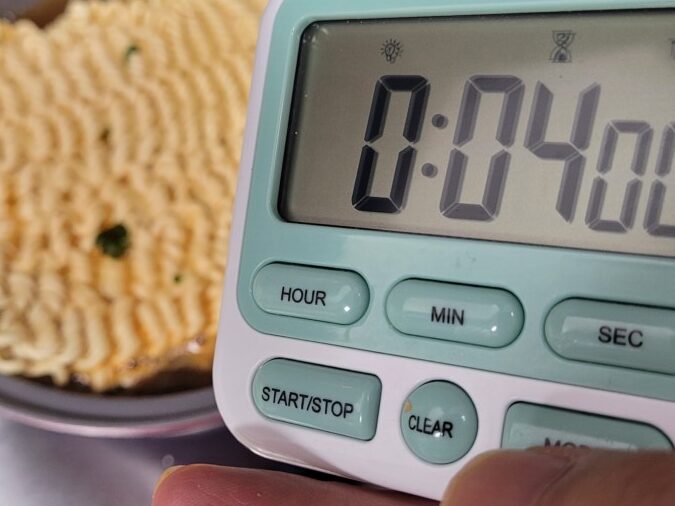
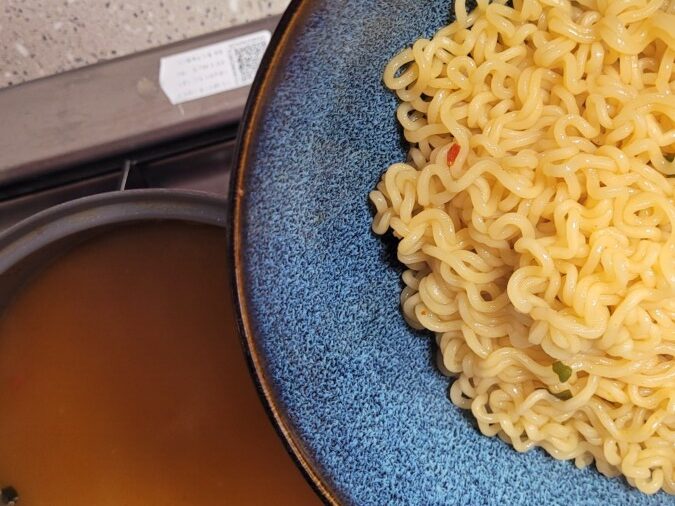
2. Four minutes from the boil, then the noodles come out. This is the one. I time from the moment it starts boiling — four minutes, the same as the bag — and then lift the noodles into the bowl and leave the broth on the heat. The egg goes in then, and the scallion, and it cooks until the white has set and the yolk hasn’t.
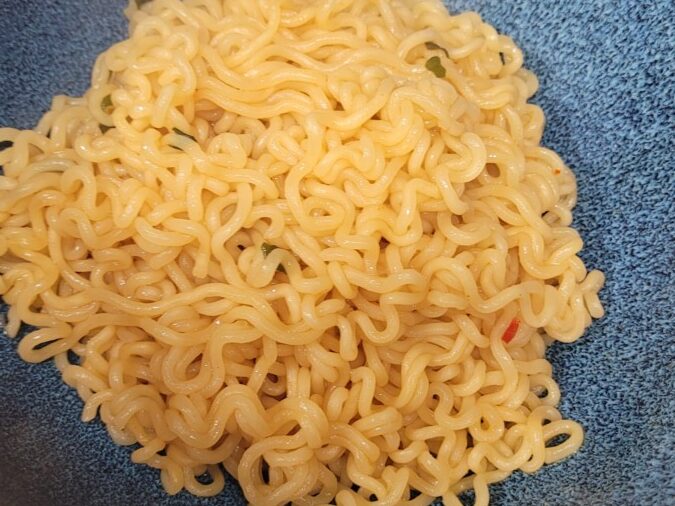
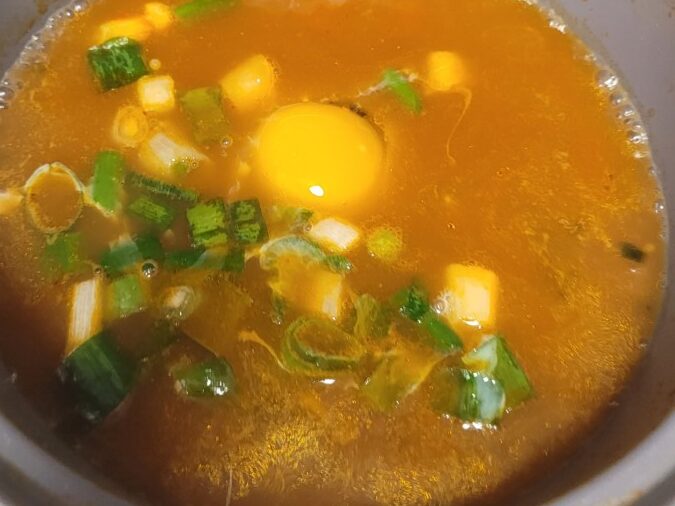
3. Pour the broth over. The noodles are waiting in the bowl. The broth comes over the top with the egg.
The reason this works is simple and it took me years to notice. The noodles are not being undercooked — they get their full four minutes. What they don’t get is the extra minute the egg needs.
An egg takes about a minute to come to soft-set. If the noodles are still in the pot for that minute, they spend it going soft. Everyone puts an egg in their ramen. Almost nobody gives the egg its own minute.
So you end up with a soft yolk and firm noodles in the same bowl, which is normally a choice between two things.
That is the honest state of this argument. Two companies print two different methods, most Korean households use a third, and the instructions on the bag go unread in both languages.

If you want one answer
Cook it the way the bag says, once, exactly. Then change one thing at a time.
Water first. 550 ml is a lot less than most people pour. More water doesn’t make more soup, it makes weaker soup.
Then timing. Thirty seconds either side of the printed time is a real difference.
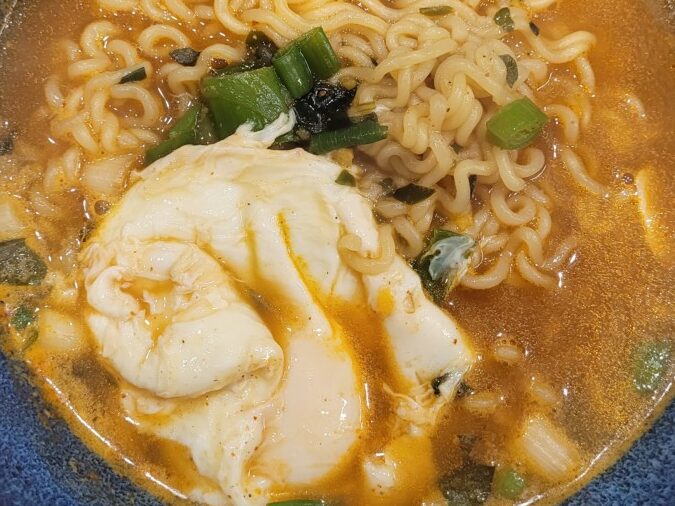
Then additions. One egg, cracked in during the last minute and left alone so it sets around the yolk. Scallion at the very end. Kimchi if you have it. Ottogi’s bag suggests exactly these three, which tells you they’re not a modern internet thing.