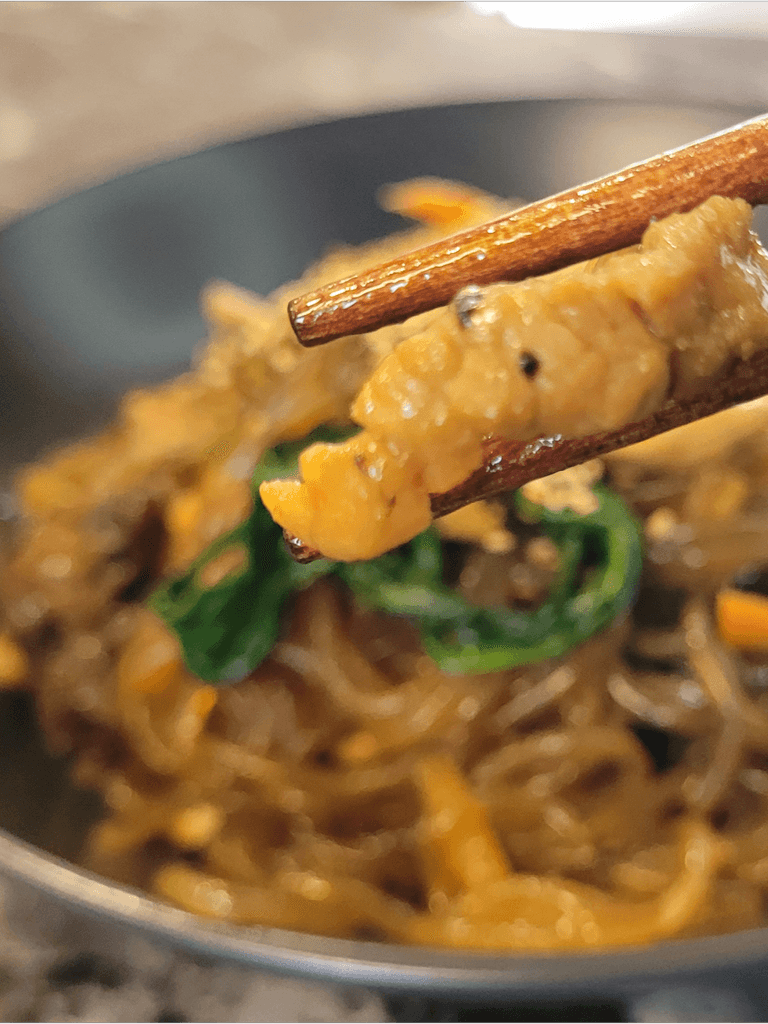
Japchae has a reputation problem in English. Every write-up calls it the labor-intensive one — the banquet dish, the thing that appears at weddings and holidays, where every vegetable is julienned and fried in its own separate pan and then everything gets tossed together in a bowl the size of a sink.
That version exists. We stopped making it.
Japchae — say it JAHP-chay — can be done in one pan, and the version that comes out is better in one specific way: the noodles are still springy two days later.
That is not a small claim. Leftover japchae is normally terrible. The noodles keep drinking sauce overnight, swell, go soft, and weld into a single block you have to cut with a spoon. Most people accept this as the nature of the dish.
It isn’t. It’s a sequencing problem, and three steps fix it.
Why the noodles stay springy
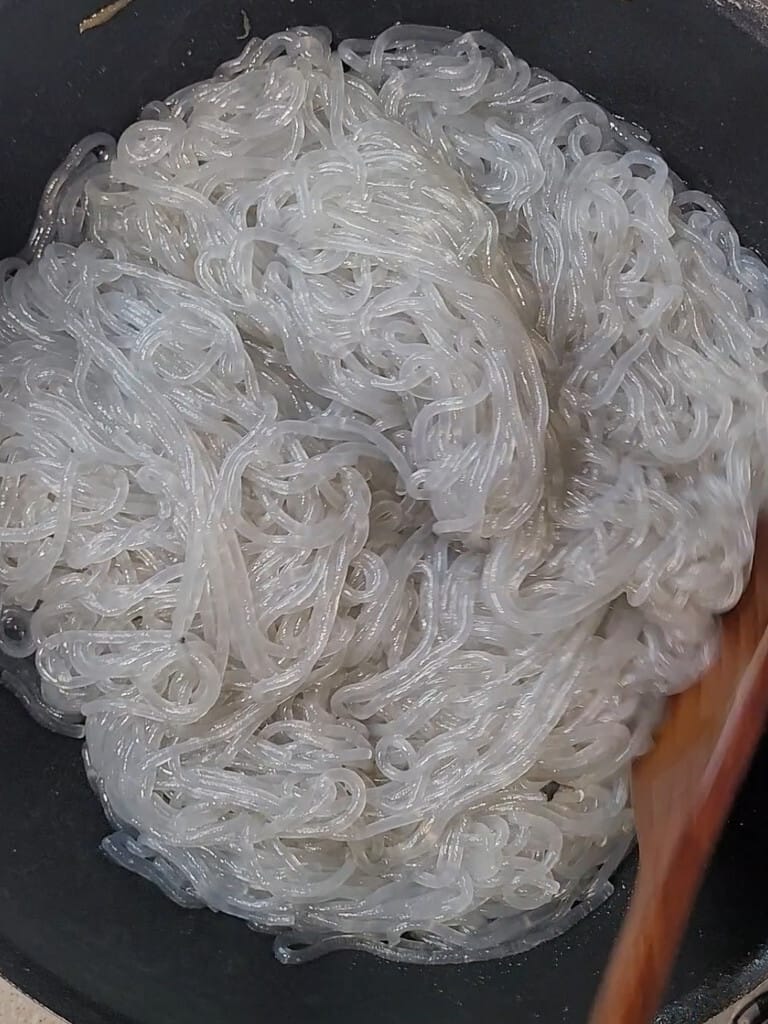
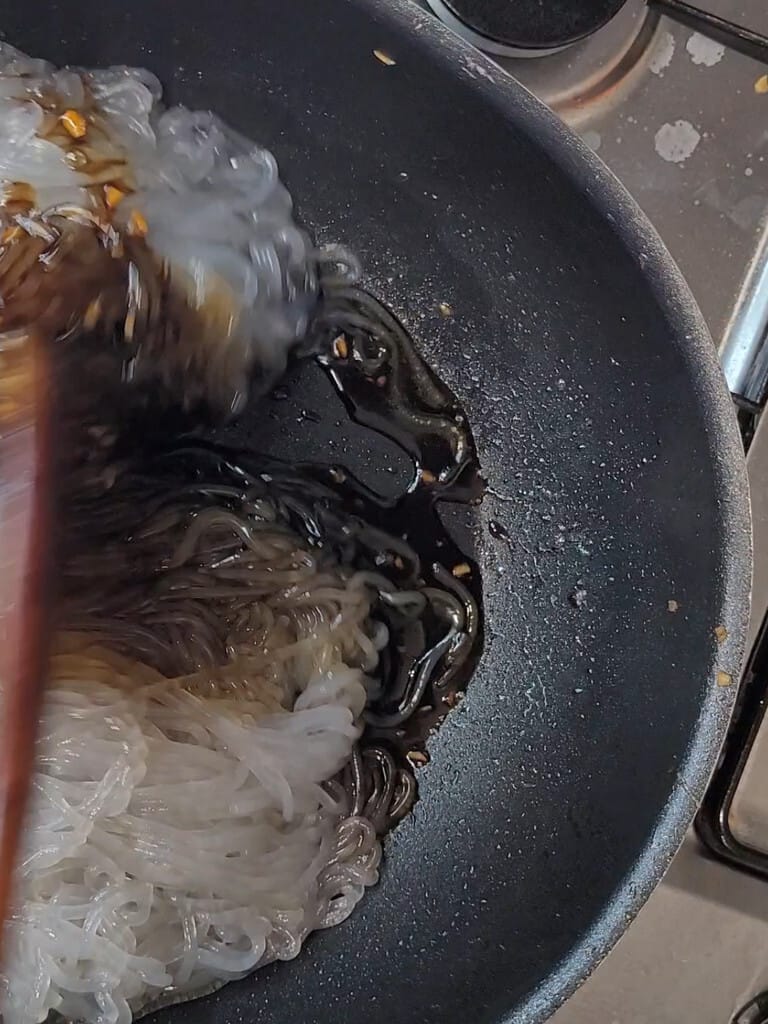
One — the noodles get fried dry before they ever meet the sauce.
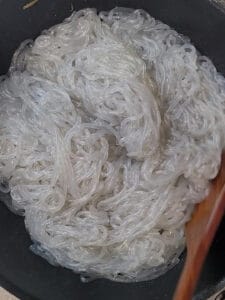
This is the step that does the most work and the one almost no recipe includes. After boiling, the noodles go into the empty pan on their own and get stirred until the surface water has cooked off. Wet noodles don’t just carry their own water — they go on absorbing, pulling moisture out of the sauce and out of everything else in the pan. Dry the surface first and they stop behaving like a sponge.
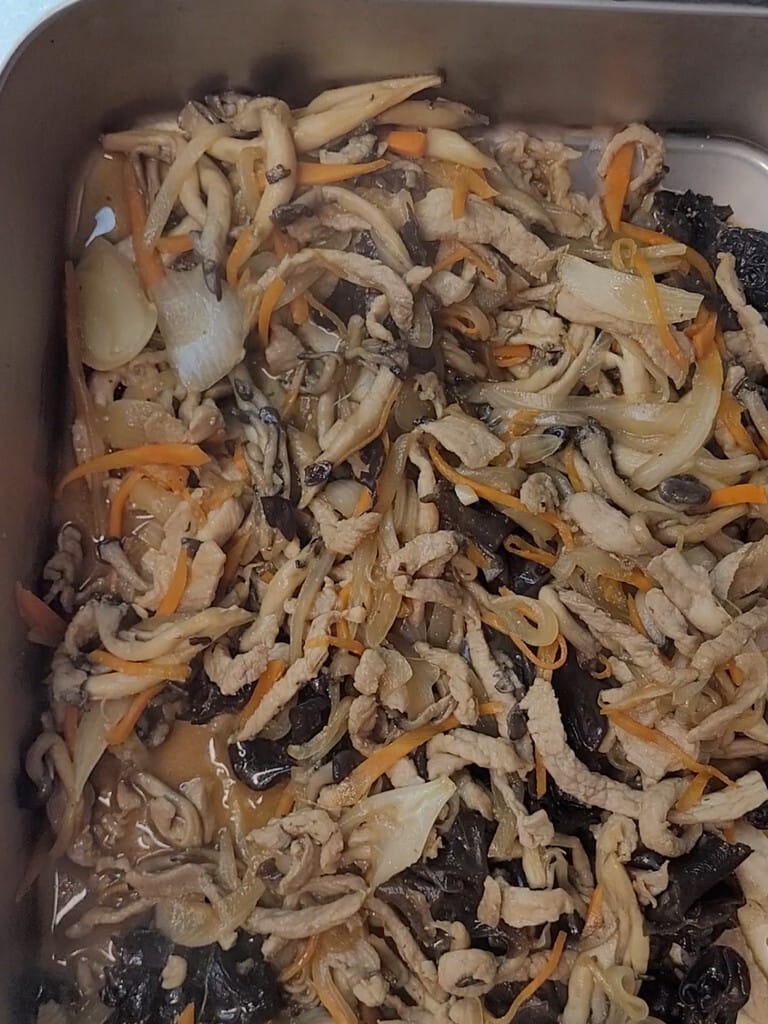
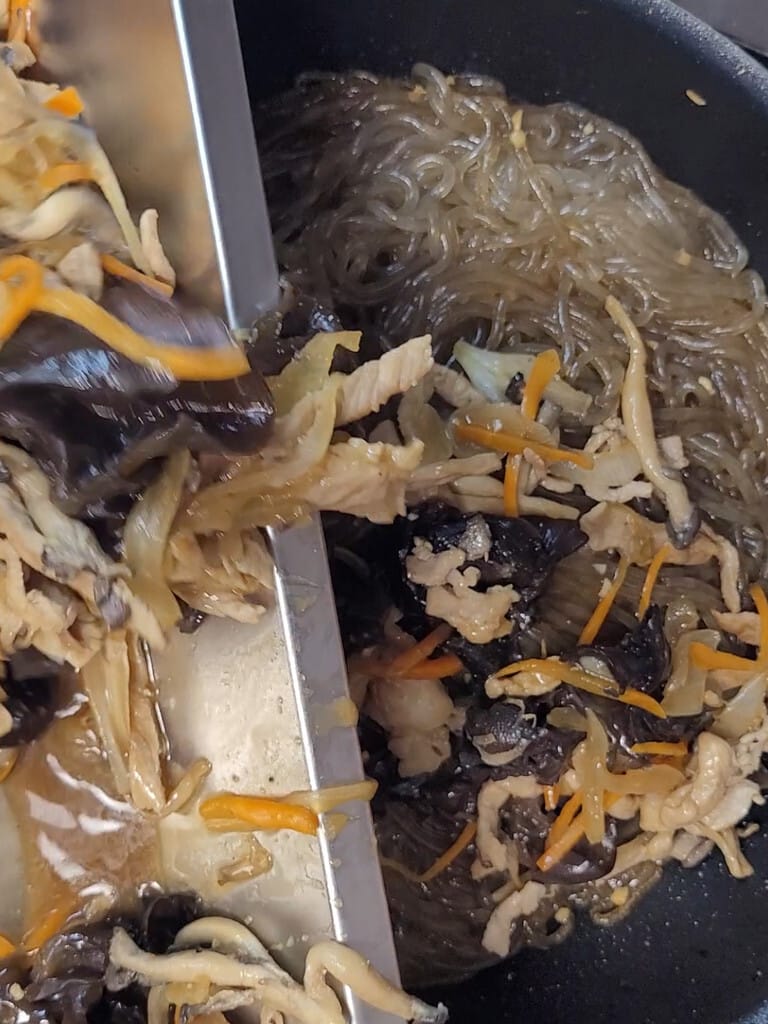
Two — the meat and vegetables come out of the pan and wait.
They’re cooked, pulled onto a wide tray, and they sit there while the noodles get their turn. The point is time. Every minute the noodles spend sitting in a pan with wet mushrooms and onions is a minute they spend swelling. Shorten that window and the texture holds.
Three — sesame oil at the very end, not the beginning.
A tablespoon and a half, stirred through after everything is already combined. It coats the outside of each strand, and that coating is what stops them gluing to each other in the container overnight.
Put together, these three give you japchae you can make on Sunday and eat on Tuesday.
A note on the dark soy sauce
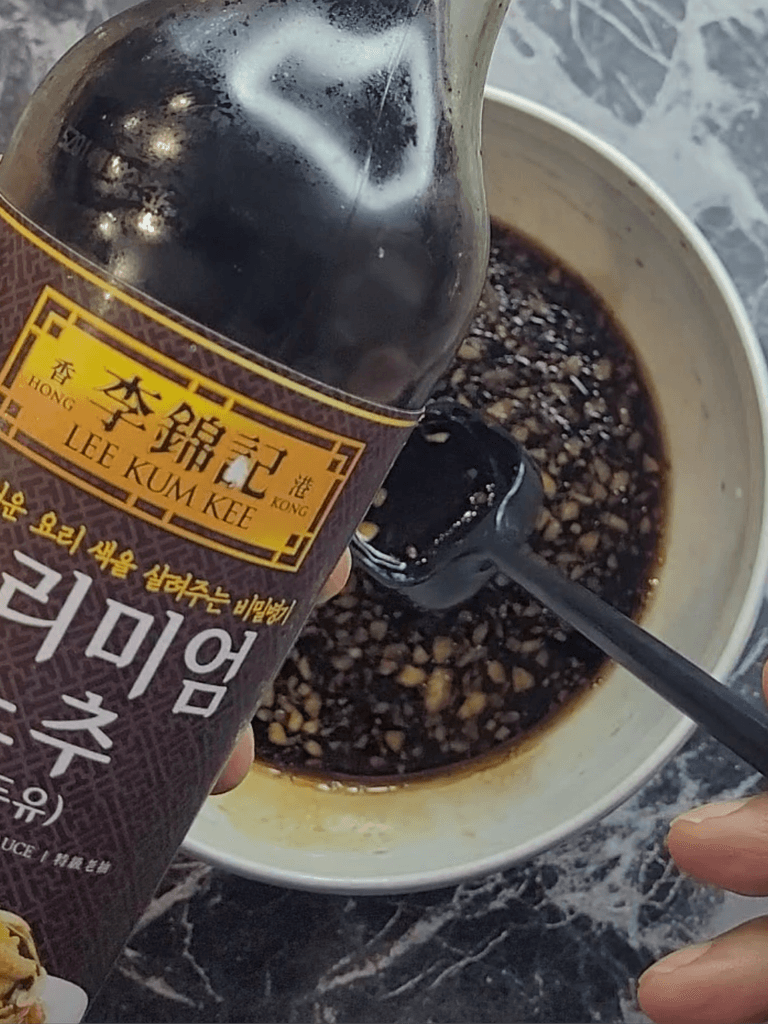

There’s a spoon of Chinese dark soy sauce in this — lao chou, sold in Korea as nochu (노추).
It is not traditional in japchae and we’re not going to pretend otherwise. It’s in our kitchen, it does two things regular soy sauce can’t, and we kept it: it darkens the noodles to that deep glossy brown you see in restaurant japchae, and it adds a layer of sweetness underneath the sugar rather than on top of it.
Leave it out and the dish still works. It will be lighter in colour and slightly less round. If you have a bottle, use it.

One-Pan Japchae (Korean Glass Noodles)
Ingredients
Noodles and vegetables
- 300 g sweet potato glass noodles dangmyeon, soaked 2 hours
- 1/2 onion sliced thin
- 1/2 carrot cut into matchsticks
- 200 g oyster mushrooms torn into strips by hand
- 1 small handful dried wood ear mushrooms soaked until soft
- 1 bunch spinach about 250 g, blanched and squeezed dry
Pork
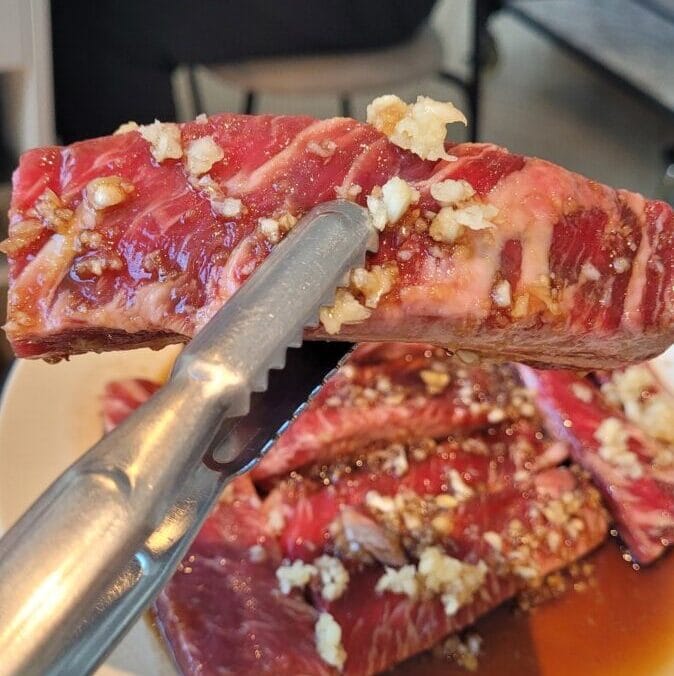
- 330 g pork loin cut into thin strips
The sauce (mix first)
- 6 Tbsp soy sauce
- 4 Tbsp brown sugar heaped
- 1 Tbsp oyster sauce
- 1 Tbsp oligodang or honey
- 1 Tbsp minced garlic heaped
- 2 tsp sesame oil
- 2 tsp Chinese dark soy sauce nochu, optional
To finish
- 1 1/2 Tbsp sesame oil
Instructions
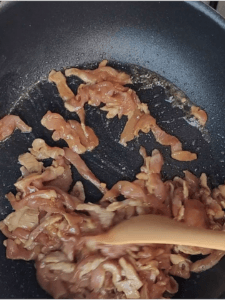
- Stir 1 1/2 tablespoons of the mixed sauce through the pork and leave it to marinate for 30 minutes.

- Heat a little oil in a pan over medium-high. Fry the pork until browned and cooked through.
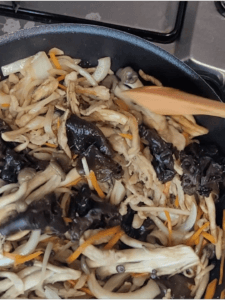
- Add the onion, carrot, oyster mushrooms and wood ear. Fry until the onion has softened.
- Pour in half of the remaining sauce and fry it through.
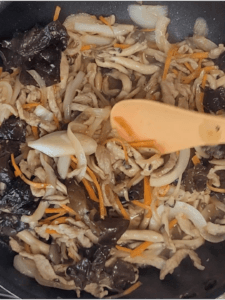
- Move everything to a wide tray and spread it out. Leave it there. Put the pan back on the heat.
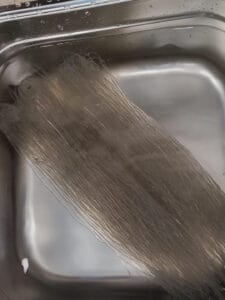
- Add the drained noodles to the empty pan on their own. Stir until the surface water has cooked off and they look dry and glossy rather than wet. Only then add the rest of the sauce, and fry until it is absorbed.
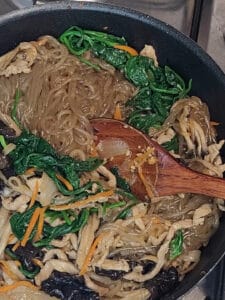
- Return the meat and vegetables, add the blanched spinach, and toss everything together over the heat until evenly coloured and hot through.
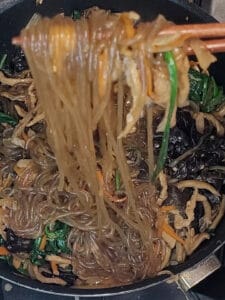
- Off the heat, stir through 1 1/2 tablespoons of sesame oil. This is the coating step that keeps the noodles from sticking to each other in the fridge.

Notes