There is a shelf in every Korean convenience store stacked with rice triangles wrapped in plastic. They cost a little over a dollar. Koreans buy them constantly.
And almost every visitor I’ve watched open one gets it wrong — and ends up with seaweed in three pieces, rice on the counter, and the quiet suspicion that this food isn’t very good.
The food is fine. The wrapper is doing something clever, and nobody explains it.
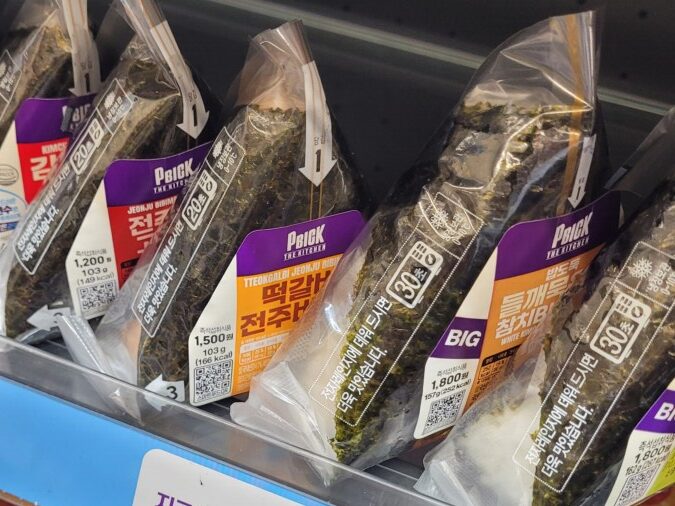
Samgak gimbap — say it SAM-gak GIM-bap — means “triangle gimbap.” Rice, a filling, and a sheet of dried seaweed, in a package engineered so the seaweed stays dry until the second you eat it.
Two things to know. Heat it first. Then pull the tabs in order.
Step one: microwave it
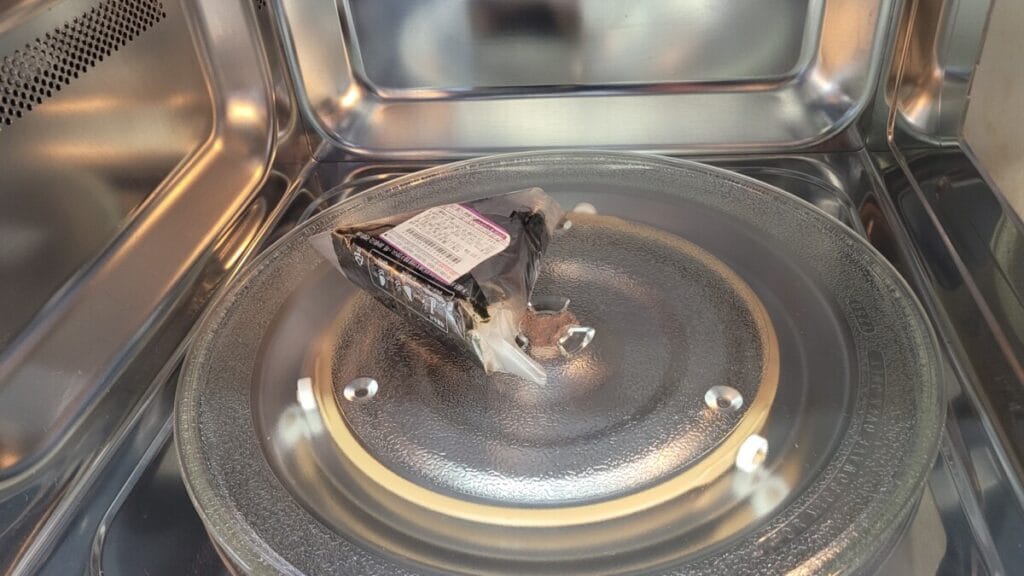
This is the part almost nobody tells foreigners, and it changes the whole thing.
Convenience store rice is kept at refrigerator temperature, which is a food safety requirement, not a serving suggestion. Cold, the rice is firm and the flavours are flat. Thirty seconds in a microwave and it’s a different food — soft, warm, and the filling smells like something.
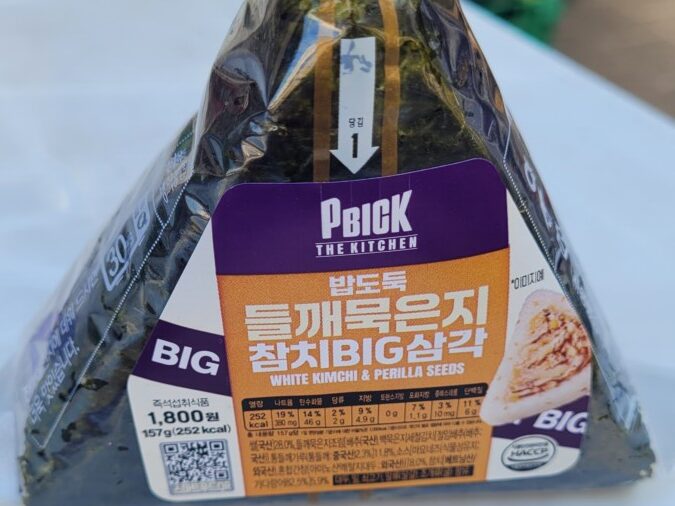
The time is printed on the package. Look for a small box on the plastic with a number in it — 20초 on the regular size, 30초 on the BIG. That’s twenty and thirty seconds. Korean convenience stores all have a microwave, usually near the hot water dispenser and the counter where people eat.
Heat it in the wrapper. Don’t open it first. The plastic is made for this and the seaweed is protected inside it.
Step two: the wrapper, in order
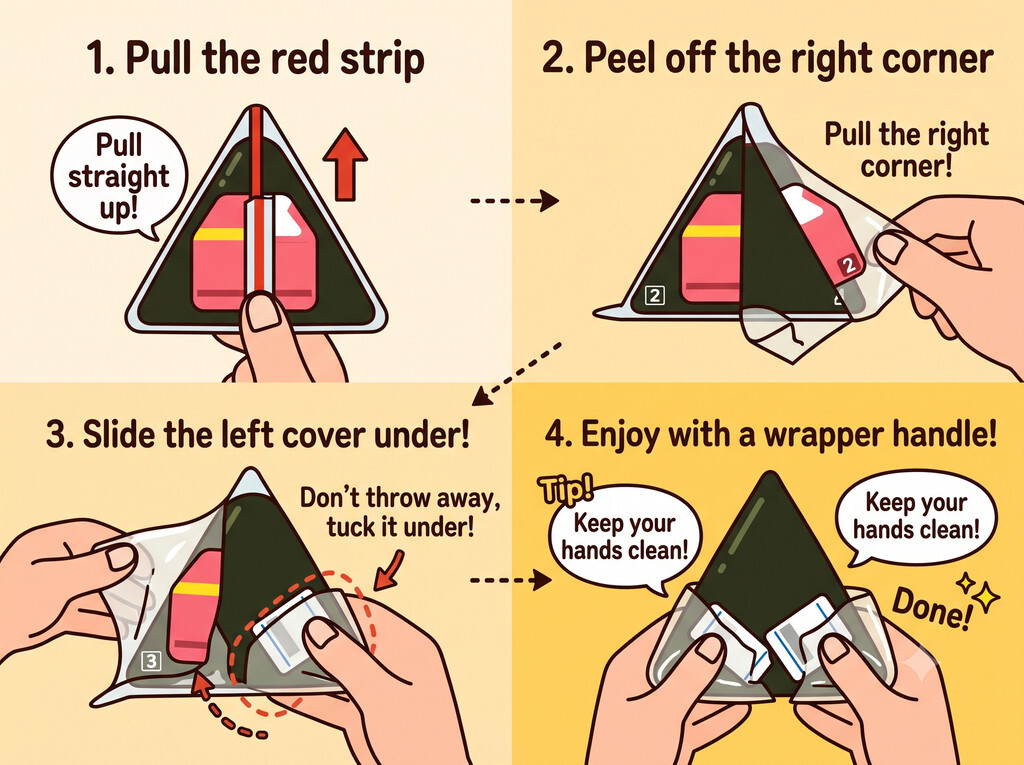
Now the part that looks like a puzzle and isn’t.
The seaweed is not touching the rice. It’s held in a separate layer of film, folded so that two sheets of plastic sit between the seaweed and the wet rice. That’s why it’s still crisp. The moment they meet, the seaweed starts going soft — so the package keeps them apart until you pull it open, and the order of pulling is what wraps them together.
The steps are numbered on the plastic. Follow the numbers.
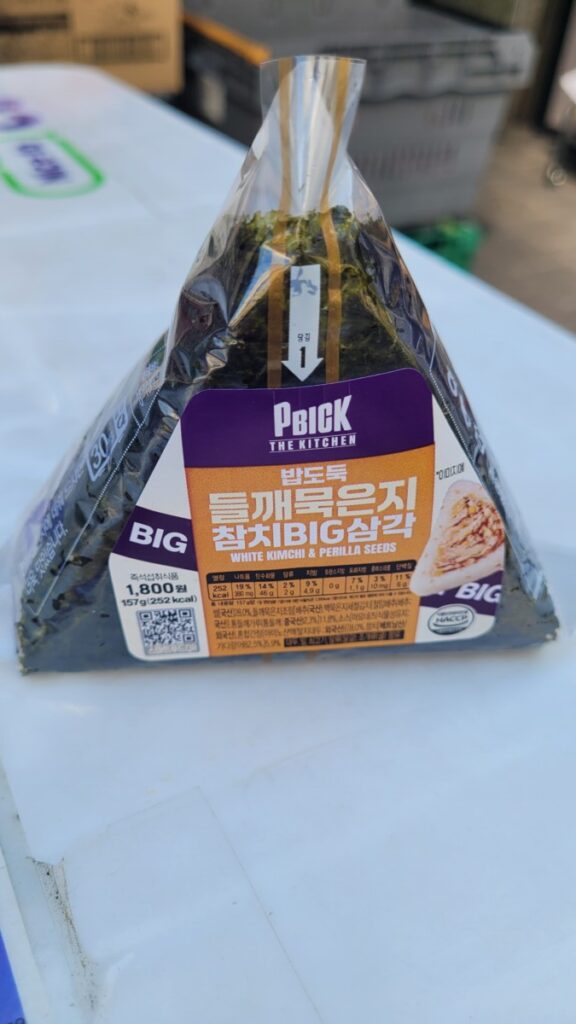
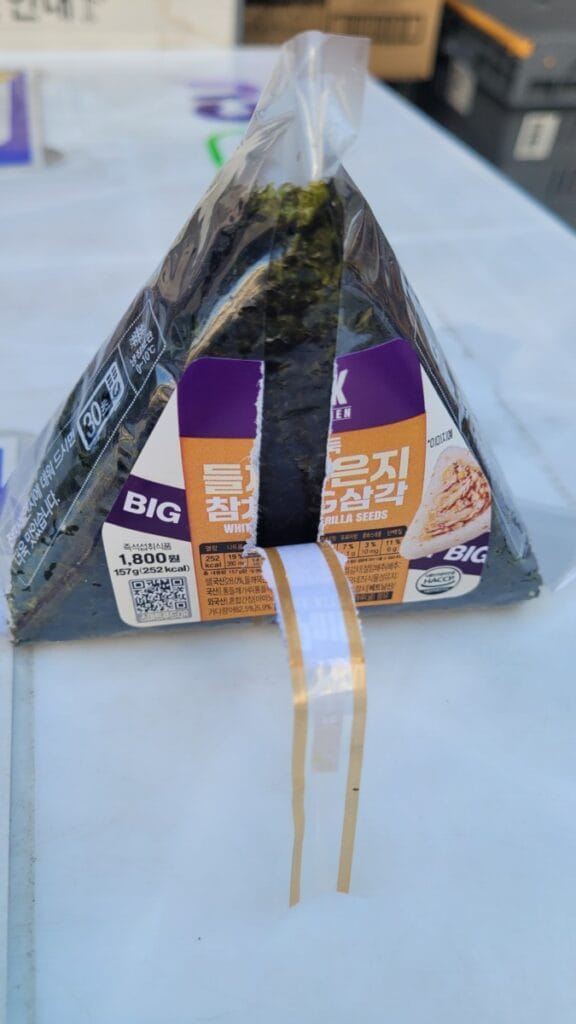
1 — Pull the strip straight up. There’s a red or coloured strip running down the middle of the back, marked 1. Hold the triangle in one hand and pull that strip all the way up and off. It cuts the wrapper into two halves.
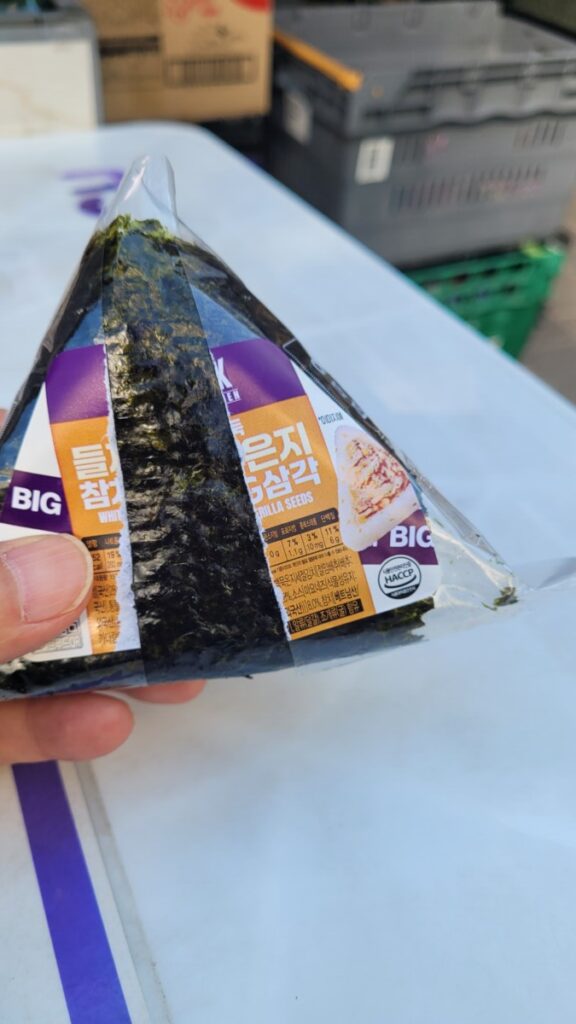
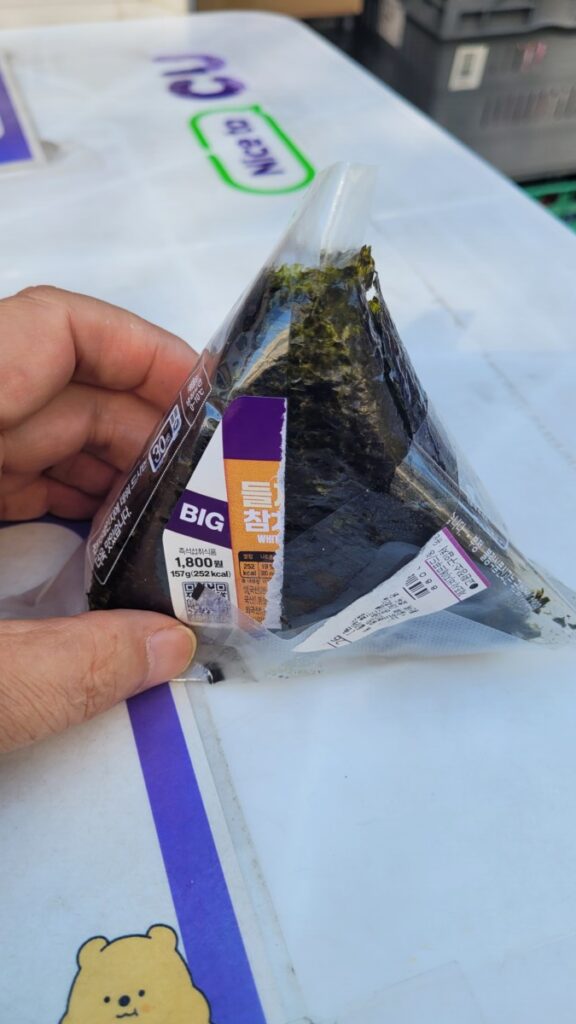
2 — Pull the right corner away. Marked 2. Grip the right flap and pull it out sideways, away from the rice. The seaweed stays behind, now lying against the rice on that side.
3 — Pull the left side out, and tuck it under. Marked 3. Same move on the other side. Don’t throw this piece away. Fold it under the bottom of the triangle.
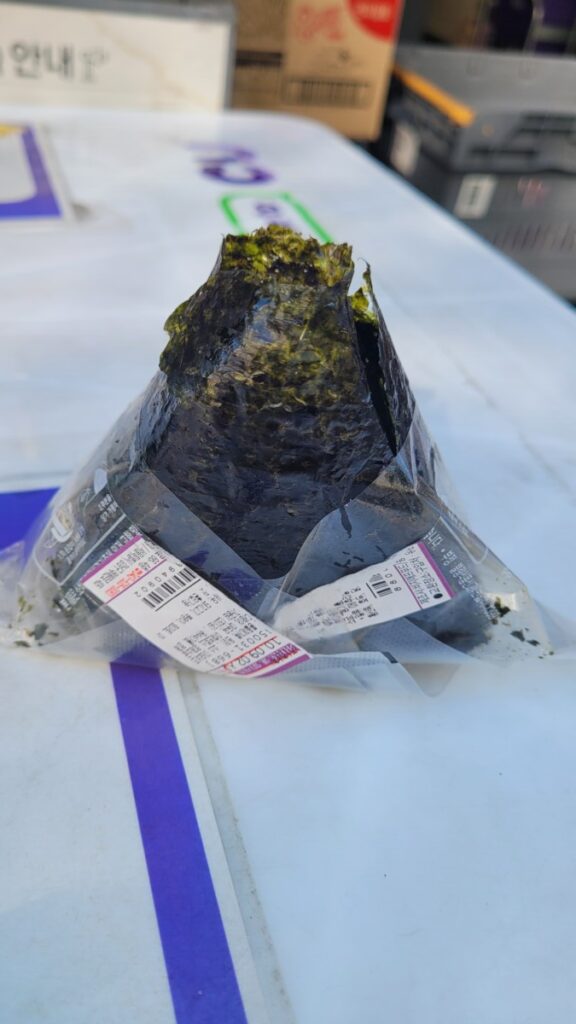
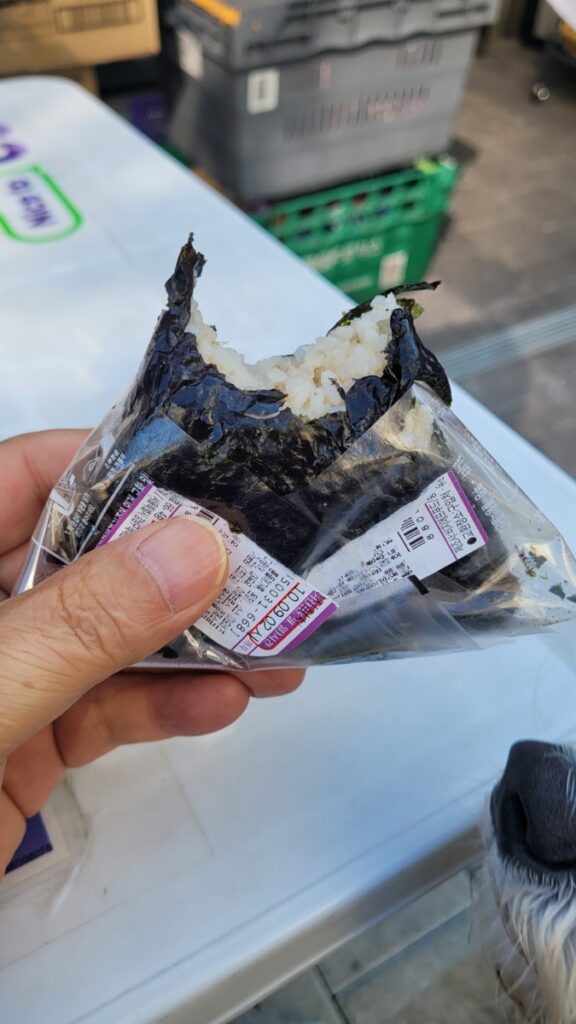
4 — Eat it holding the plastic. The two flaps you’ve pulled off become a handle. Rice is sticky, your hands stay clean, and you can eat it walking.
If a flap doesn’t come away cleanly, pull it slower and more sideways than you think. The failure mode is pulling upward, which tears the seaweed instead of sliding it out.
What it costs
Prices at a convenience store this month:
| Weight | Price | USD | |
|---|---|---|---|
| Regular | about 103 g | ₩1,200–1,500 | about $0.90–1.10 |
| BIG | about 157 g | ₩1,800 | about $1.30 |
A regular one is a snack. The BIG is a small meal — 252 kcal and noticeably thicker in the hand.
For context, that’s roughly a third of what a coffee costs at a cafe here, and the convenience store will sell you the coffee for ₩1,000 too.
What to get
The fillings rotate and every chain has its own, but a few are always there.
Tuna mayo is the default and the biggest seller in the country. If you only try one, this is the one — mild, rich, nothing challenging about it.
Kimchi is the one people expect to be difficult and isn’t. The kimchi is chopped fine and cooked into the rice rather than sitting in it, so it reads as savoury and a little sour rather than sharp.
Jeonju bibim takes the bibimbap idea — seasoned vegetables and gochujang — and packs it into rice. A good middle option.
The one in these photos is white kimchi and perilla seed with tuna, a BIG at ₩1,800. White kimchi has no chili in it at all, and perilla seed is nutty and slightly bitter in a way that has no Western equivalent. It’s a more interesting box than tuna mayo, and a stranger one.
A note on buying
The shelf often carries a discount coupon tag — a QR code offering money off if you join the chain’s app. Skip it. These apps want a Korean phone number, and a coupon on a ₩1,500 item is not worth the twenty minutes.
Just take it to the counter. Point at the microwave if you want to use it; the staff will nod. Nobody will mind you eating it standing at the window counter, and plenty of people do.