A yukhoe recipe is barely a recipe. Make a sauce from six things in a bowl, toss raw beef in it, put an egg yolk on top. Five minutes.
Everything that matters happens before that, at the meat counter. And it’s a different problem depending on which country you’re standing in.
Yukhoe is not steak tartare
Say it YOOK-hweh. It’s Korean raw beef, and the first thing Americans assume is that it’s tartare with a Korean accent. It isn’t.
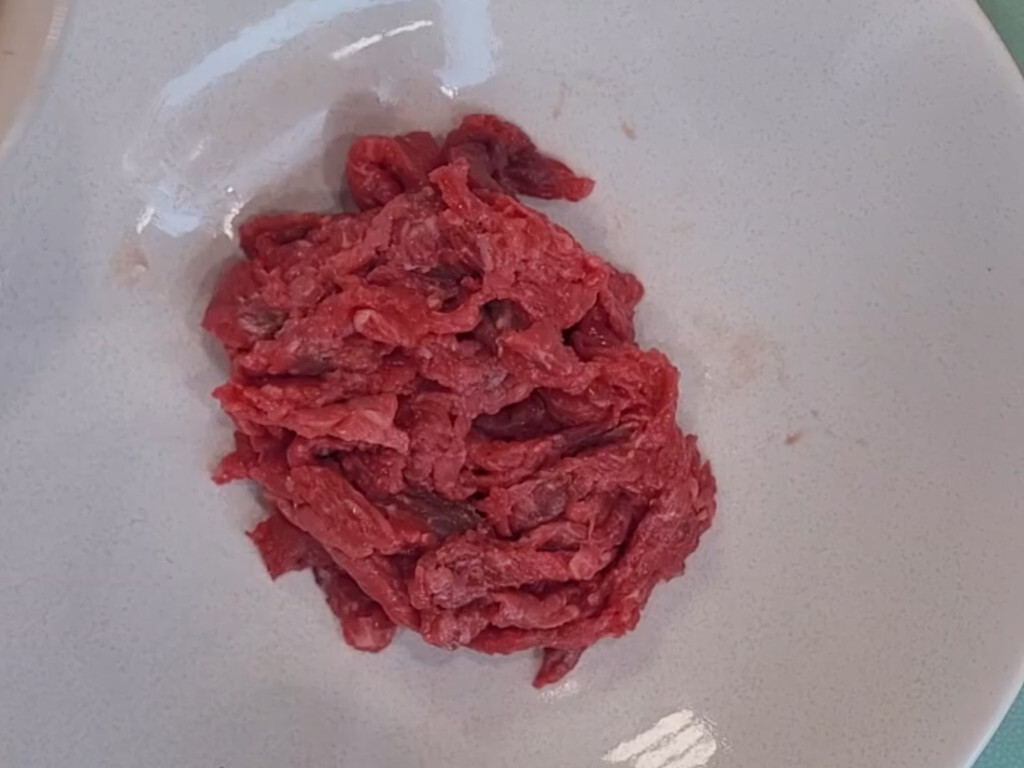
Tartare is minced or finely chopped. Yukhoe is cut into thin strips, so every piece keeps its shape and the texture is closer to soft sashimi than to anything ground.
The seasoning goes the other way too. Tartare is sharp — capers, shallot, mustard, Worcestershire. Yukhoe is sweet and nutty: soy, sugar, sesame oil, garlic. The yolk on top isn’t garnish. You break it and mix it through, and it turns into part of the dressing.
The cut: top round

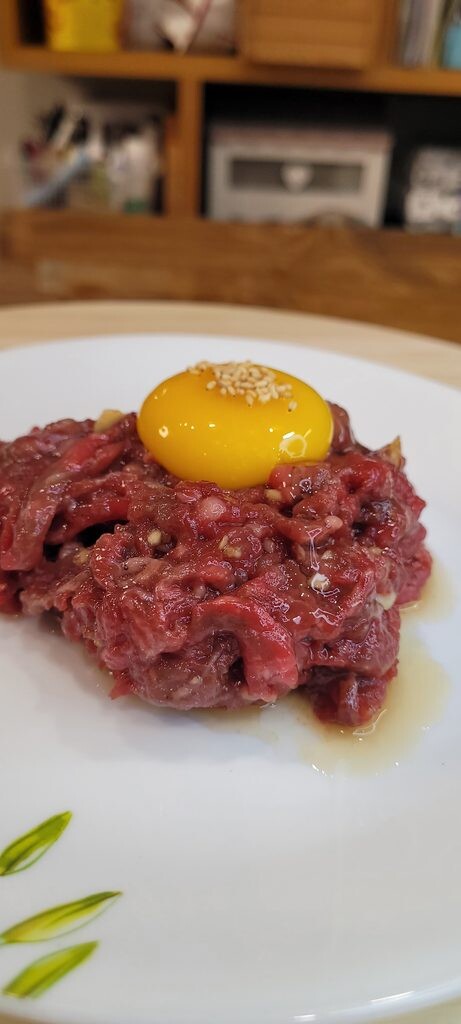
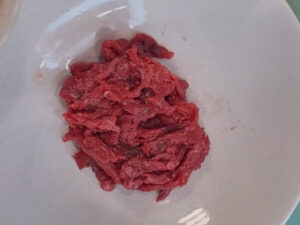
Koreans make yukhoe from udun (우둔), which corresponds to top round — a lean muscle from the back leg with a fine grain and almost no fat running through it.
That leanness is the point. Fat that tastes rich on a grill tastes waxy when it’s raw and cold. Top round has the clean, slightly sweet beef flavour you want and nothing coating your mouth afterwards.
What you don’t want is anything marbled. A prime ribeye makes a bad yukhoe.
In Korea, the beef comes labelled
This is the part that makes yukhoe an ordinary weeknight dish in Korea and a risky project almost everywhere else.
At a Korean supermarket meat counter, beef for yukhoe is sold as 육회용 — for yukhoe — on its own label, cut for the purpose, usually that day. I bought 200 g of top round marked that way during a sale at a Nonghyup Hanaro Mart for ₩9,000, about $6.70. That’s the same kind of supermarket where Koreans buy their side dishes by the tray, and it’s an entirely normal thing to pick up on the way home.
The label is doing real work. It tells you the meat was handled with the expectation that nobody is going to cook it.
In the US, there is no such label
American beef grades — Prime, Choice, Select — describe quality and marbling. None of them certifies beef as safe to eat raw, and official US food safety guidance does not treat raw beef as safe.
That doesn’t mean nobody in the US eats raw beef. It means the responsibility shifts entirely to you, and to whoever sold you the meat. If you’re going to make this outside Korea:
- Buy a whole piece from a butcher you trust, and tell them what it’s for. Many will cut from a fresh primal and handle it accordingly.
- Never use pre-ground or pre-cut supermarket beef. Bacteria live on the surface. Grinding or pre-slicing spreads the surface through the whole thing.
- Buy it the day you eat it, and keep it cold until the moment it’s dressed.
- Use a pasteurized egg for the yolk if you can find them.
- Don’t serve it to young children, anyone pregnant, older adults, or anyone with a weakened immune system. This is the standard advice for raw animal products and it applies here without exception.
What happens when the supply chain fails
Japan has its own version of this dish, yukke, borrowed from Korea and served for decades at Korean-style barbecue restaurants.
In April and May 2011, an E. coli O111 outbreak traced to yukke at the Yakiniku-zakaya Ebisu chain killed four people, two of them children, and sickened at least 56. The company hadn’t tested its raw beef for bacteria in two years.
Japan’s response was to change the law. From October 2011, beef served raw had to be heated to 60°C for two minutes at a depth of 1 cm, then have that outer centimetre trimmed off, with fines and possible prison for violations. Traditional restaurant yukke more or less disappeared.
The point isn’t that yukhoe is reckless. Koreans eat it all the time, safely, because the beef that reaches them was handled for it. The point is that the safety lives in the supply chain, not in the recipe — and when you take the recipe somewhere the supply chain doesn’t exist, you’re the supply chain.
My one change: soba sauce instead of salt
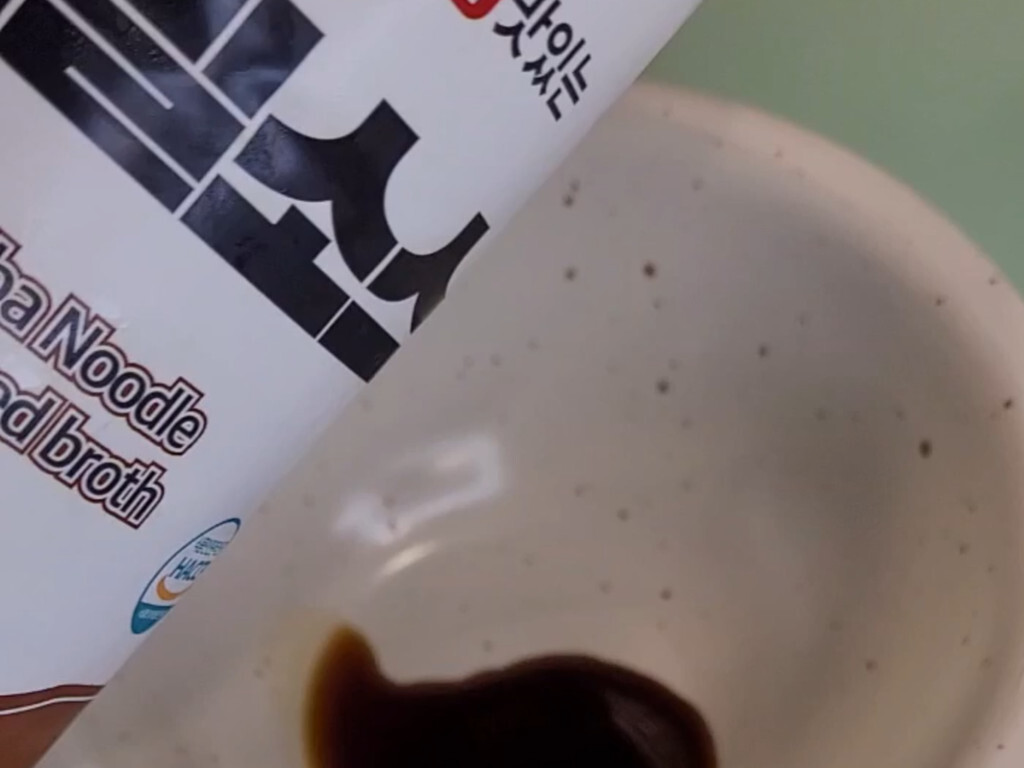
Most yukhoe sauces take a small pinch of salt. I replace it with a spoonful of soba noodle sauce — the bottled Japanese-style dipping sauce, tsuyu, sold in Korean supermarkets as 모밀소스.
It’s salty, but it also carries bonito and kelp, so it adds savouriness that plain salt doesn’t. Against a lean cut like top round, that depth is what makes the beef taste like more than itself.
This is not traditional. It’s how I make it. If you want the classic version, leave out the soba sauce and add a small pinch of salt. We’ve been honest about seasonings like this before and the same rule applies: you should know what’s in it and why.

Yukhoe (Korean Raw Beef)
Ingredients
For the beef
- 7 oz top round udun, about 200 g, very fresh, kept cold
For the sauce
- 2 1/4 tsp soy sauce
- 2 1/4 tsp soba noodle sauce tsuyu
- 1 Tbsp brown sugar
- 1 1/2 tsp minced garlic
- 1 1/2 Tbsp toasted sesame oil
- 1/8 tsp black pepper
To finish
- 1 egg yolk pasteurized if possible
- 1 tsp toasted sesame seeds
Instructions
- Keep the beef refrigerated until the sauce is ready.

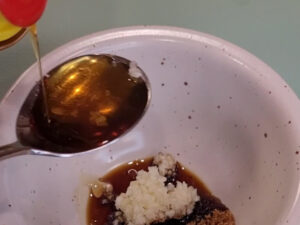
- In a bowl, mix the soy sauce, soba noodle sauce, brown sugar, minced garlic, sesame oil and black pepper until the sugar dissolves.
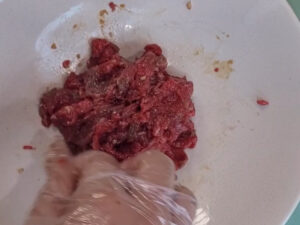
- Add the beef to the sauce and toss gently with your hands until every strip is coated.
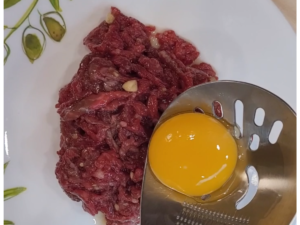
- Mound it on a plate, make a small well in the centre and set the egg yolk in it.
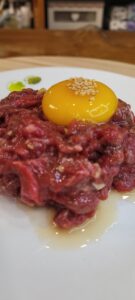
- Scatter the sesame seeds over the top and serve immediately.

Notes
How to eat it
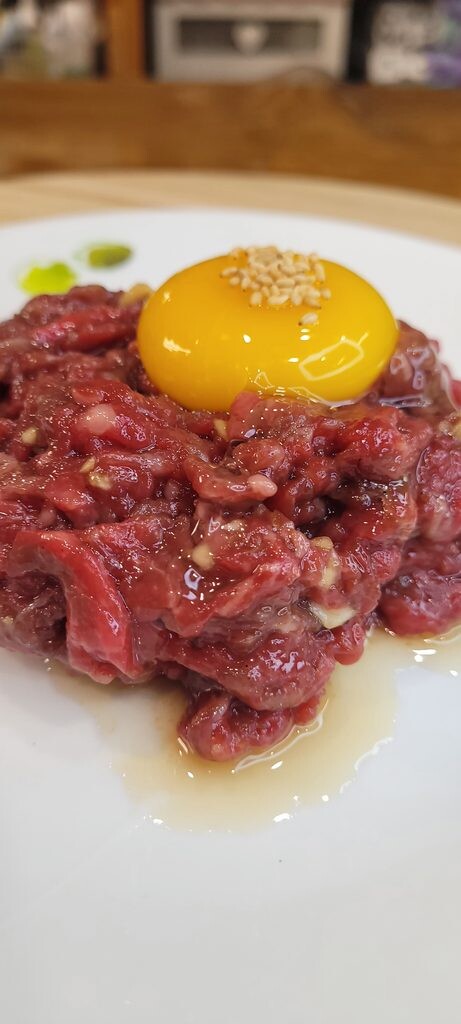

Break the yolk at the table, not before. Mix it through with chopsticks so the yolk coats the strips.
Eat it immediately. Raw beef sitting in soy sauce starts to cure — the colour darkens, the texture tightens. Five minutes from dressing to eating is the window.
What goes with it. Restaurant yukhoe often comes with thin strips of Korean pear underneath, and sometimes pine nuts. I didn’t use either here. Rice and a bowl of soup are enough, or a glass of soju if it’s that kind of evening.
What I’d tell you before you make it
The recipe is the easy part. Spend your effort on the beef.
Cold all the way through. Cold beef, cold bowl, dress it and serve it. Warm raw beef is where things go wrong.
If the beef doesn’t smell clean, don’t make it. Not “cook it instead” — throw it out and try another day. There’s no sauce that fixes this.
If you’re outside Korea and unsure, eat it at a Korean restaurant first. You’ll know what it’s supposed to taste like, and someone else will have done the hard part.