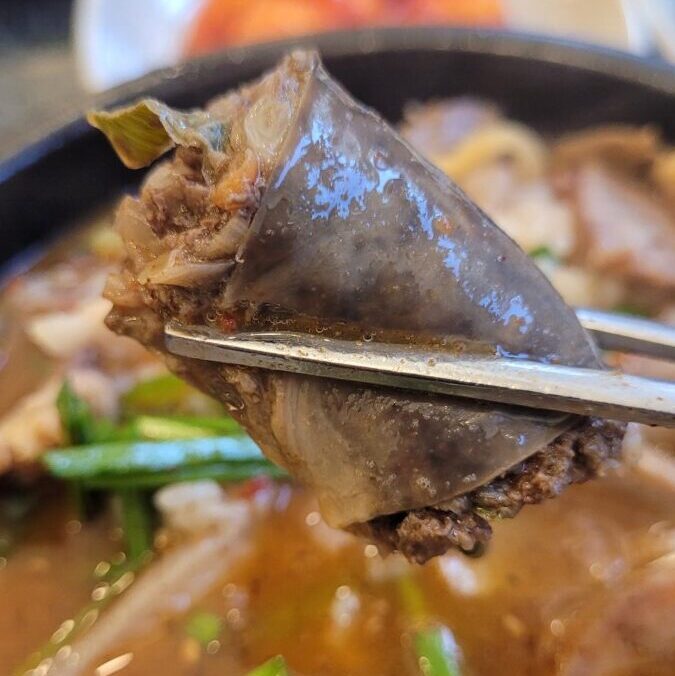

Ssambap (쌈밥, say SAHM-bahp) is a Korean meal you assemble yourself: a leaf of lettuce or perilla in your palm, a spoonful of rice, a piece of grilled meat, a dab of sauce, folded into one bite. The name is literal — ssam means wrap, bap means rice.
There’s a rule about eating in Korea that nobody writes down: the good places are upstairs.
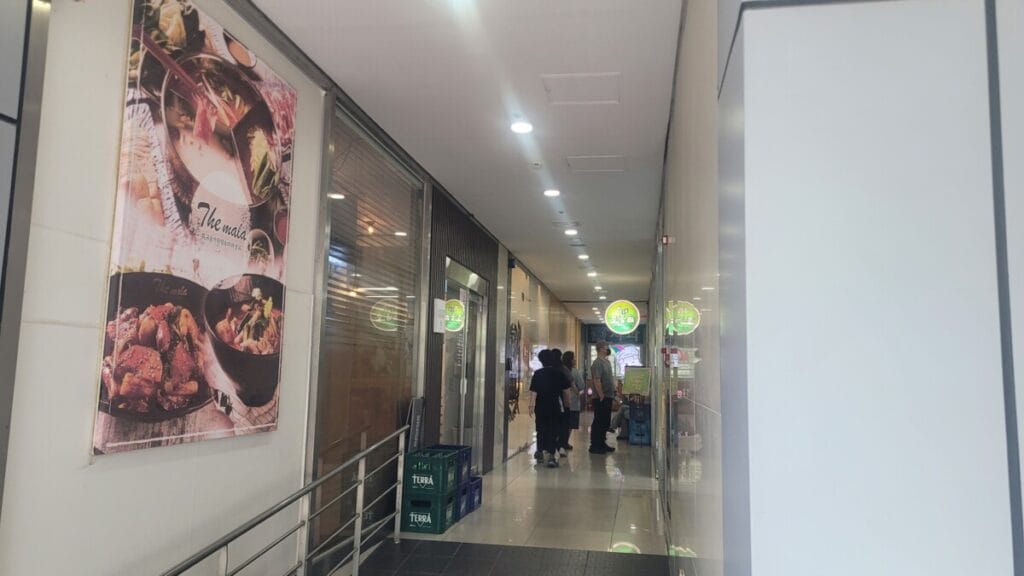
Not on the main street. Not at ground level with a window you can see into. Second floor of an office building, down a corridor, past a dentist and a dry cleaner, behind a door you’d never open on purpose.
Ssambap — say it SSAM-bap — is one of the things you find up there. It’s the Korean meal you assemble yourself: a basket of leaves, a bowl of rice, something grilled or stir-fried, and a pot of sauce. You build each bite by hand.
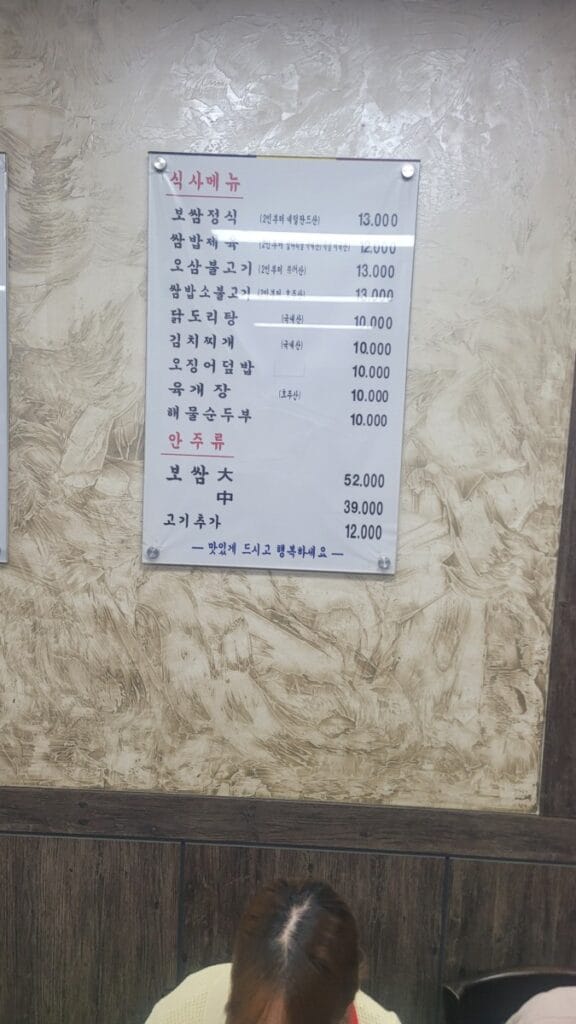
This is a place I’ve been going to for years in Sangam, Seoul’s broadcasting district. It doesn’t appear on any English-language list, and as far as I can tell nobody has ever posted its prices. So here’s the whole menu.
What ssambap actually is
Ssam (쌈) means “wrapped.” Bap (밥) means “rice.” Put together, it’s a meal built around wrapping.
Here’s the sequence, and it matters:
- Take a leaf in your palm — lettuce, perilla, kale, steamed cabbage
- Put a spoonful of rice on it
- Add a piece of meat
- Add a dab of ssamjang (쌈장), the thick seasoned soybean paste
- Fold it closed and eat the whole thing in one bite
That last part isn’t a suggestion. A ssam is built to be one mouthful. Koreans will make one the size of a golf ball and put the entire thing in. Biting a wrap in half and watching it fall apart is the visible sign of a first-timer.
How this differs from Korean BBQ: at a BBQ place you grill the meat yourself at the table and the leaves are a side option. At a ssambap place the kitchen cooks everything, it arrives ready, and the wrapping is the meal. No grill, no smoke, no tongs. It’s a lunch you can eat in a work shirt.
Why you’d never find this place
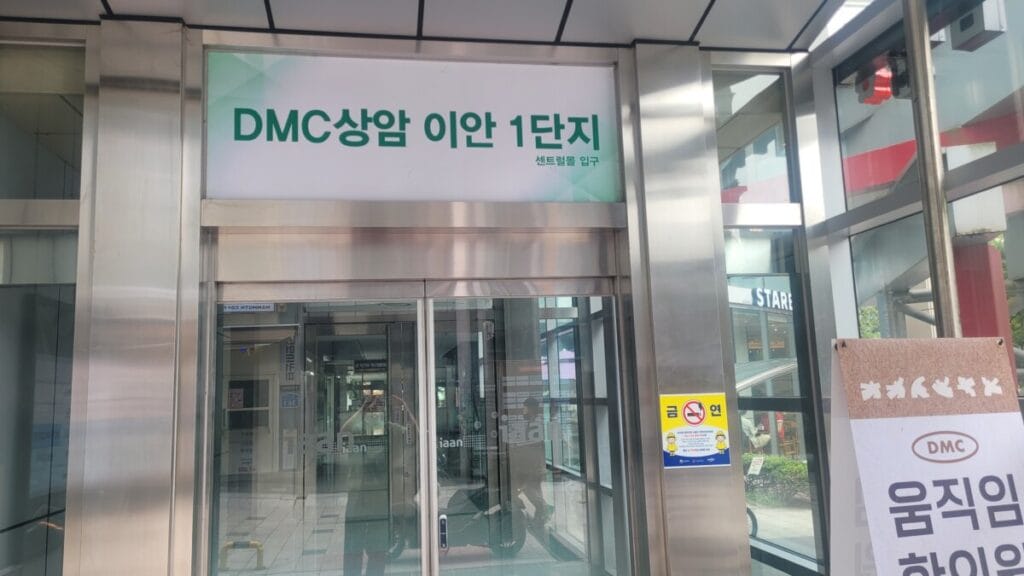
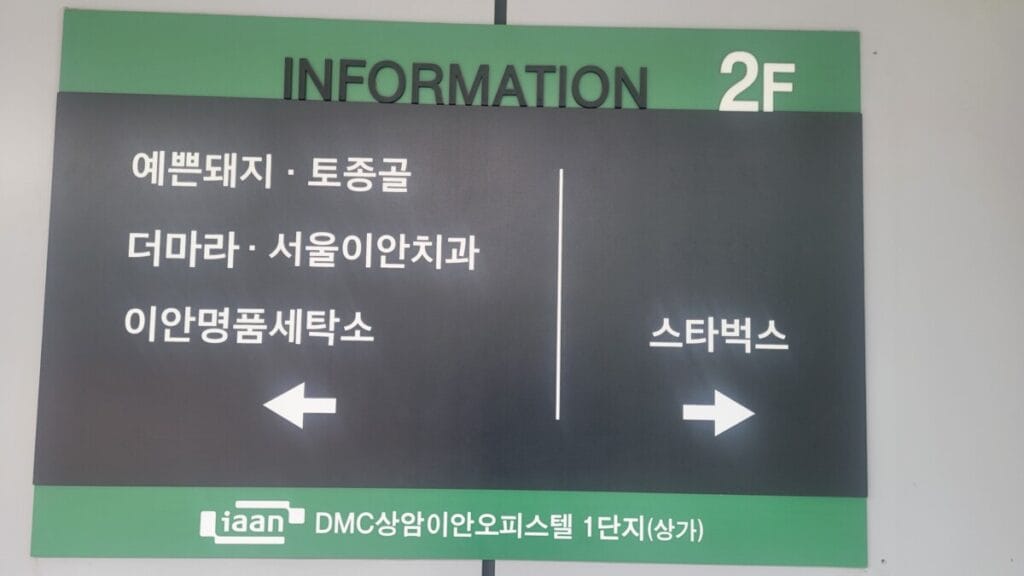
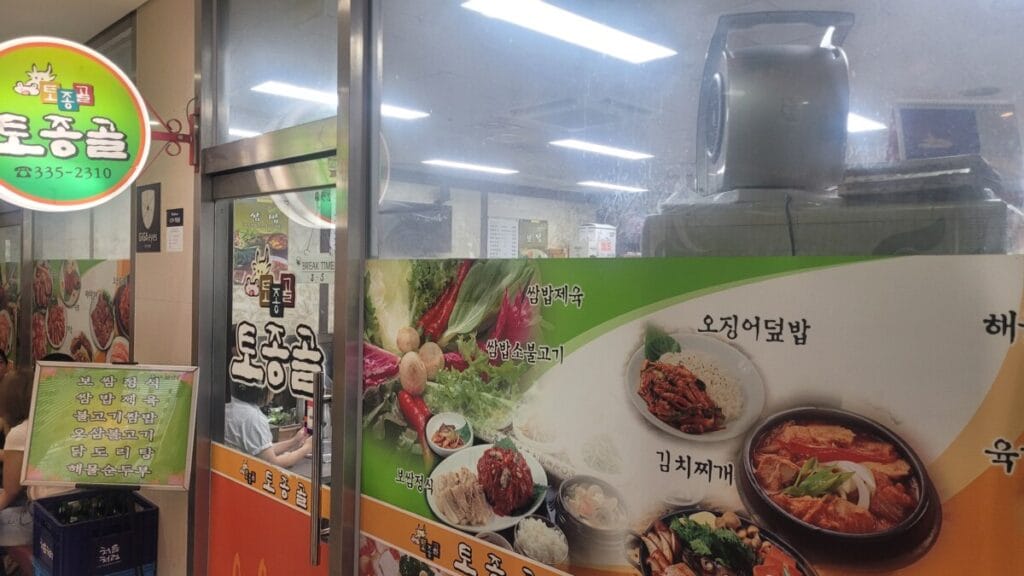
The restaurant is called Tojonggol (토종골). It’s on the second floor of a residential-commercial building in Sangam — enter through the mall entrance, go up, turn left past the dentist.
I walked a full loop on my first visit.
This is worth understanding as a category, not a quirk. Korean cities stack their restaurants vertically. Ground-floor rent goes to cafés, convenience stores and franchises. The independent kitchens — the ones a neighborhood eats at for a decade — go to the second, third, fourth floor, or into a basement.
Which is why a visitor walking a street in Seoul sees chain coffee and fried chicken franchises and concludes those are the options. The rest is above your head.
How to actually spot them:
- Look up. Korean buildings stack vertical signs by floor. That column of signboards is a restaurant directory
- Check the building lobby. There’s almost always a floor guide inside the door
- Trust the second floor. Stairs off a corridor with no view of the inside is a normal and good sign here
- Use Naver Map, not Google. The upstairs places are on it
The full menu, with prices
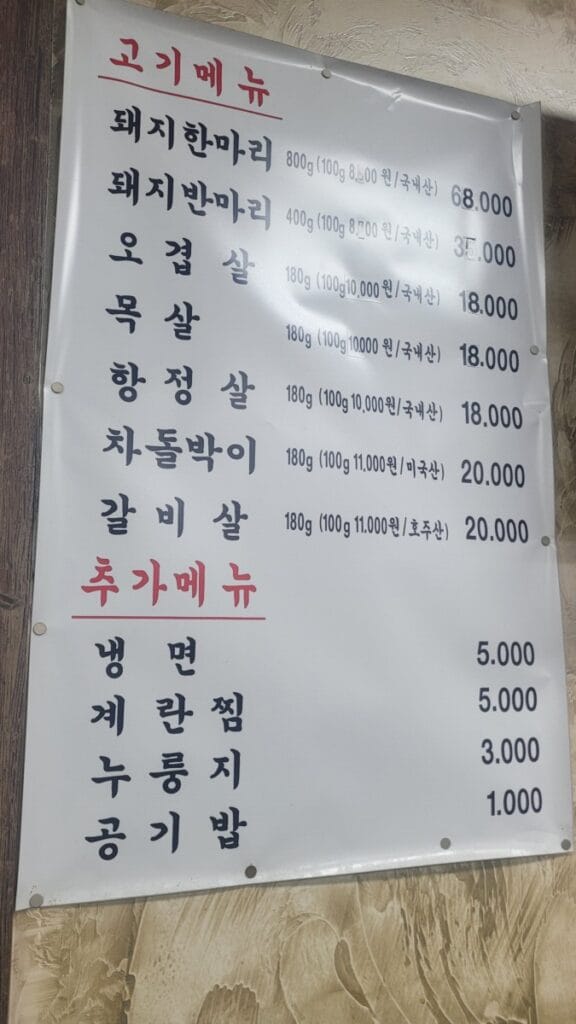
Nobody had posted these, so here’s all of it. Prices at roughly ₩1,340 to the dollar.
Meals
| Dish | Price | ≈ USD | Note |
|---|---|---|---|
| Bossam set (boiled pork) | ₩13,000 | ~$9.70 | 2 people minimum · pork from the Netherlands |
| Ssambap jeyuk (spicy stir-fried pork) | ₩12,000 | ~$8.90 | 2 people minimum |
| Osam bulgogi (squid + pork) | ₩13,000 | ~$9.70 | 2 people minimum · squid from Chile |
| Ssambap beef bulgogi | ₩13,000 | ~$9.70 | 2 people minimum · beef from Australia |
| Dakdoritang (braised spicy chicken) | ₩10,000 | ~$7.45 | domestic chicken |
| Kimchi jjigae | ₩10,000 | ~$7.45 | domestic |
| Squid rice bowl | ₩10,000 | ~$7.45 | |
| Yukgaejang (spicy beef soup) | ₩10,000 | ~$7.45 | beef from Australia |
| Seafood sundubu (soft tofu stew) | ₩10,000 | ~$7.45 |
Grilled meat (by weight)
| Cut | Weight | Price | ≈ USD |
|---|---|---|---|
| Whole pork platter | 800g | ₩68,000 | ~$50.60 |
| Half platter | 400g | ₩35,000 | ~$26 |
| Pork belly (ogyeopsal) | 180g | ₩18,000 | ~$13.40 |
| Pork neck (moksal) | 180g | ₩18,000 | ~$13.40 |
| Pork jowl (hangjeongsal) | 180g | ₩18,000 | ~$13.40 |
| Beef brisket (chadolbaegi) | 180g | ₩20,000 | ~$14.90 |
| Short rib meat (galbisal) | 180g | ₩20,000 | ~$14.90 |
Drinking food and add-ons
Bossam platter ₩52,000 (large) / ₩39,000 (medium) · extra meat ₩12,000 Cold noodles ₩5,000 · steamed egg ₩5,000 · scorched rice ₩3,000 · extra rice ₩1,000
A note on those origin labels. Dutch pork, Chilean squid, Australian beef — Korea requires restaurants to print the country of origin for major ingredients, so you see this on every menu in the country once you know to look. A neighborhood restaurant using imported pork isn’t a scandal; it’s the norm, and the label is the system working. What it also tells you: the pork cuts sold by weight are marked domestic, and those are priced accordingly.
What to order
After several years: the stir-fried pork and the squid-and-pork.
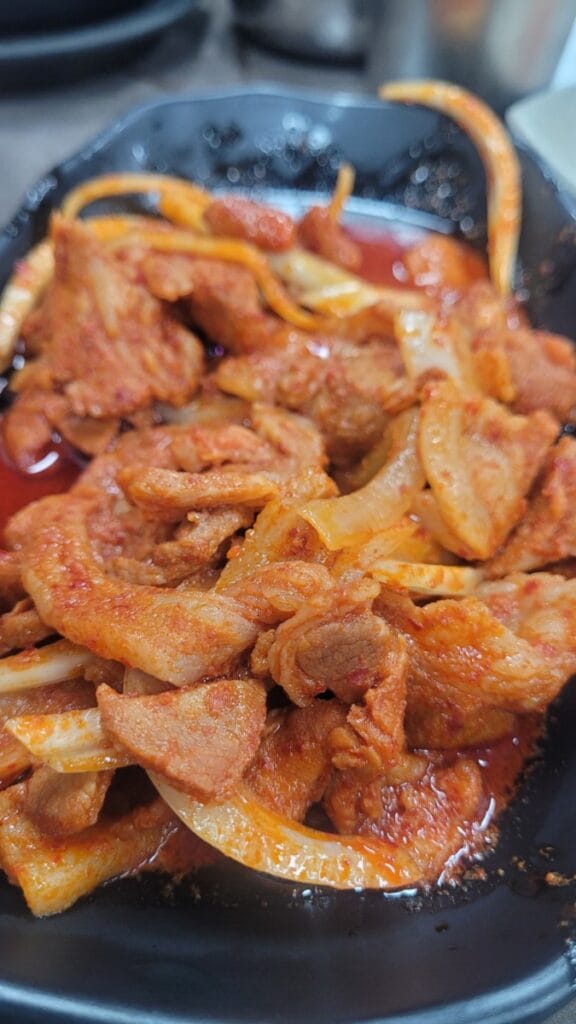
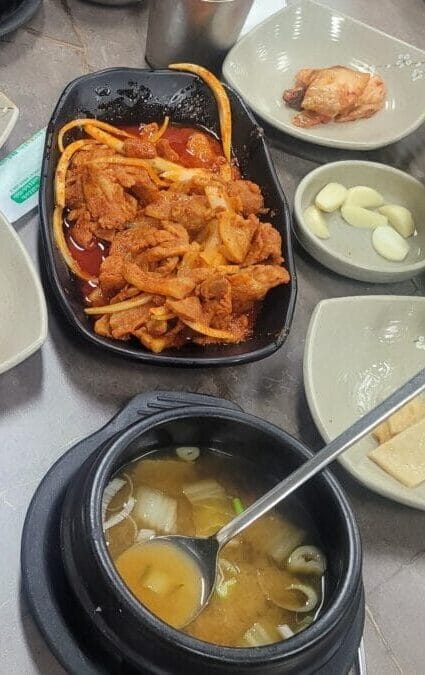
Jeyuk (제육, ₩12,000) — pork stir-fried in a red chili-and-garlic sauce. Heavily seasoned but it doesn’t wear you out, and it is built to be eaten with rice.
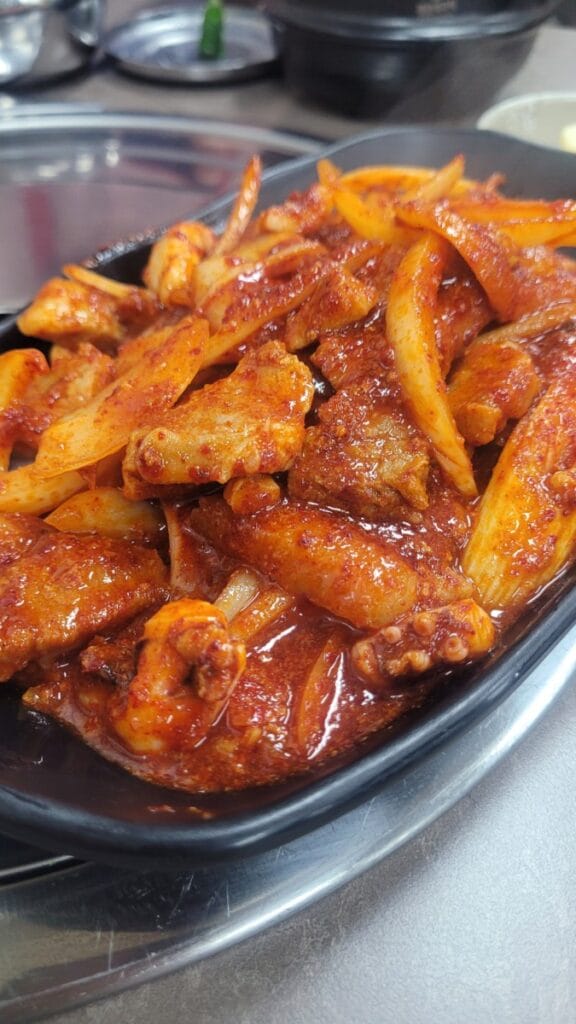
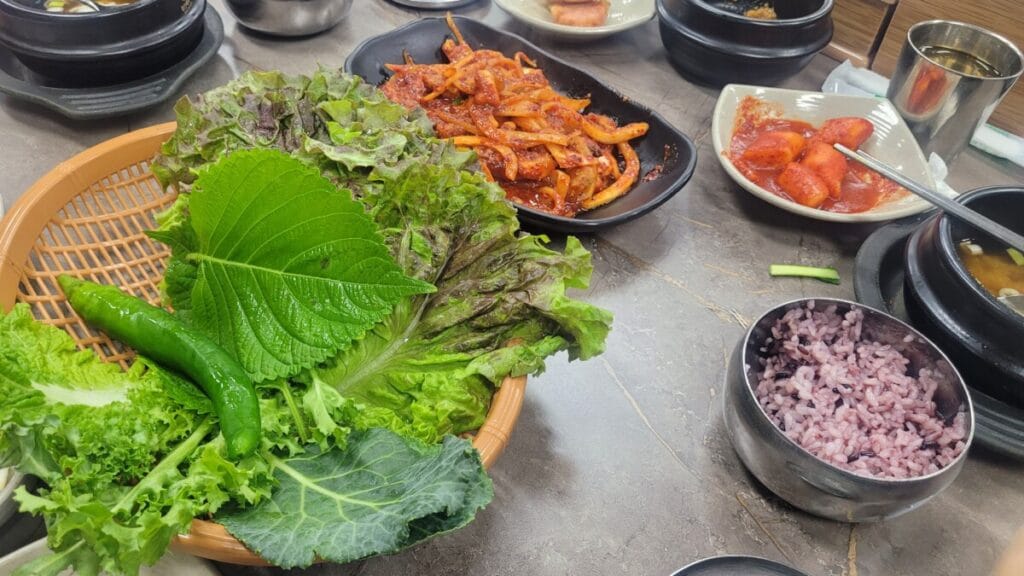
Osam (오삼, ₩13,000) — the same sauce with squid added to the pork. Completely different texture. Squid has a firm snap that pork doesn’t, and having both in one mouthful is the point.
I’ve brought a lot of people here and ordered these, and not once has anyone said it was just okay.
If there are two of you, get one of each. Two sauces on the table means you don’t get tired of either one. Since these require two people anyway, there’s no reason not to.
If you’re eating alone, read this first
The ssambap and bossam sets require a minimum of two people. It’s printed small on the menu and it catches people out.
This is common in Korea and rarely flagged in English. Shared dishes — stews for the table, BBQ, set meals — often carry a two-person minimum, because the portion and the pricing assume a group.
Solo options here, all ₩10,000 (~$7.45):
- Squid rice bowl
- Kimchi jjigae
- Yukgaejang — spicy shredded beef soup
- Seafood sundubu — soft tofu stew
- Dakdoritang — braised spicy chicken
All of them come with rice and banchan. Ten thousand won for a hot stew and a full set of side dishes is a normal Seoul lunch, and it’s roughly what a sandwich costs in a US city.
The side dishes are the reason I keep going
Banchan comes free with every order. At this place the lineup is better than it has any right to be.
There is tteokbokki in the banchan.
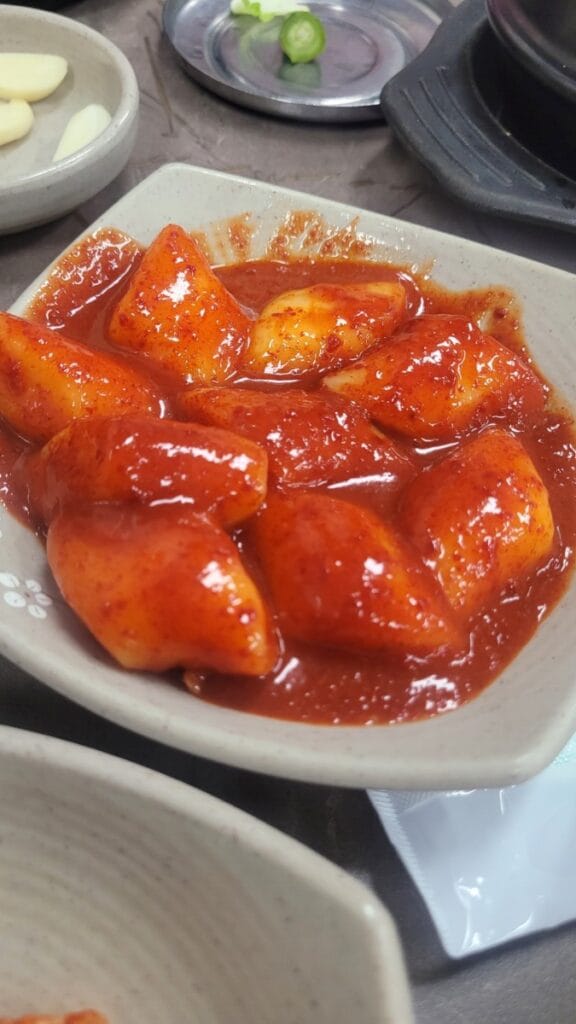
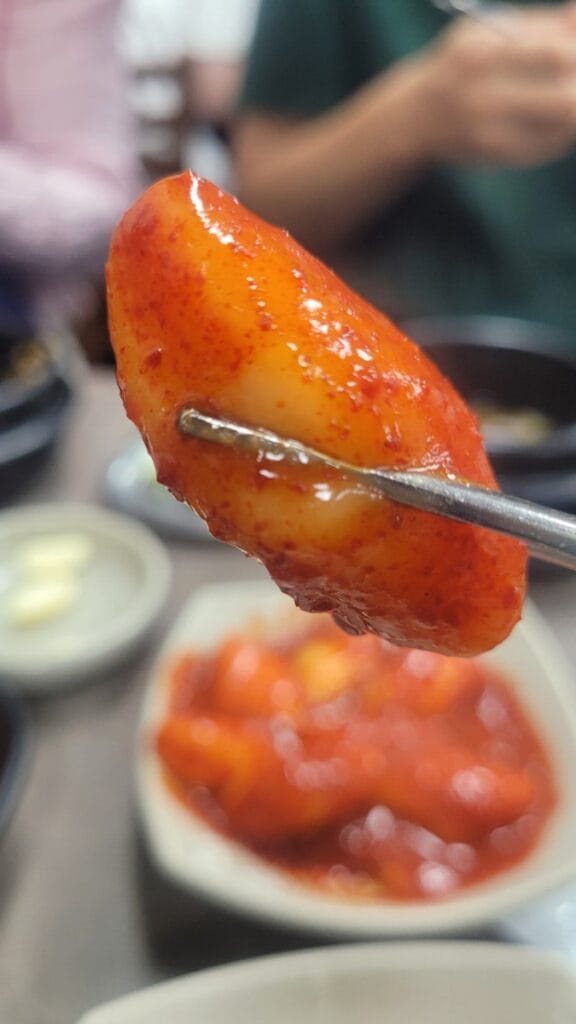
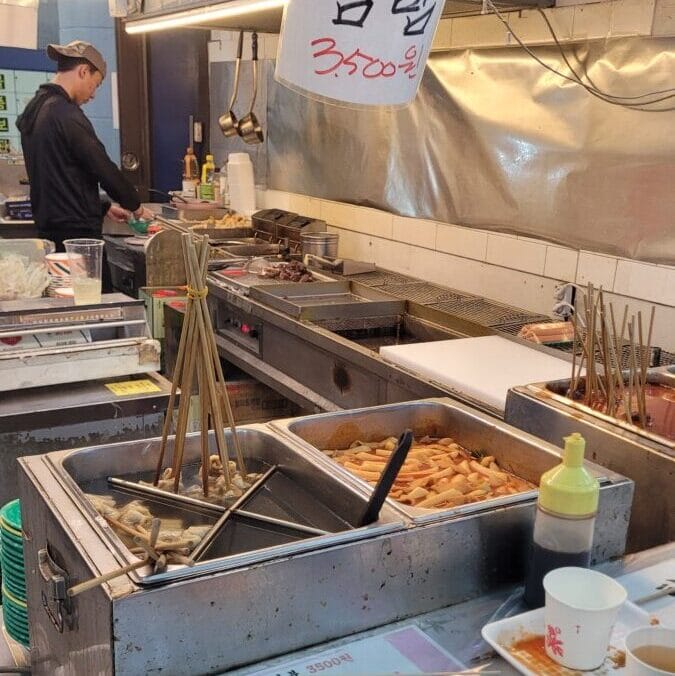
Tteokbokki — the chewy rice cakes in sweet chili sauce that Korea sells on every street corner — arrives here as a free side dish, on a proper plate, sauce pooled, rice cakes plump. I have not seen another rice-and-stew restaurant do this.
You get it regardless of what you order.
Alongside it: stir-fried fish cake, pan-fried Spam, seasoned bean sprouts. The table fills up before the main dish arrives.
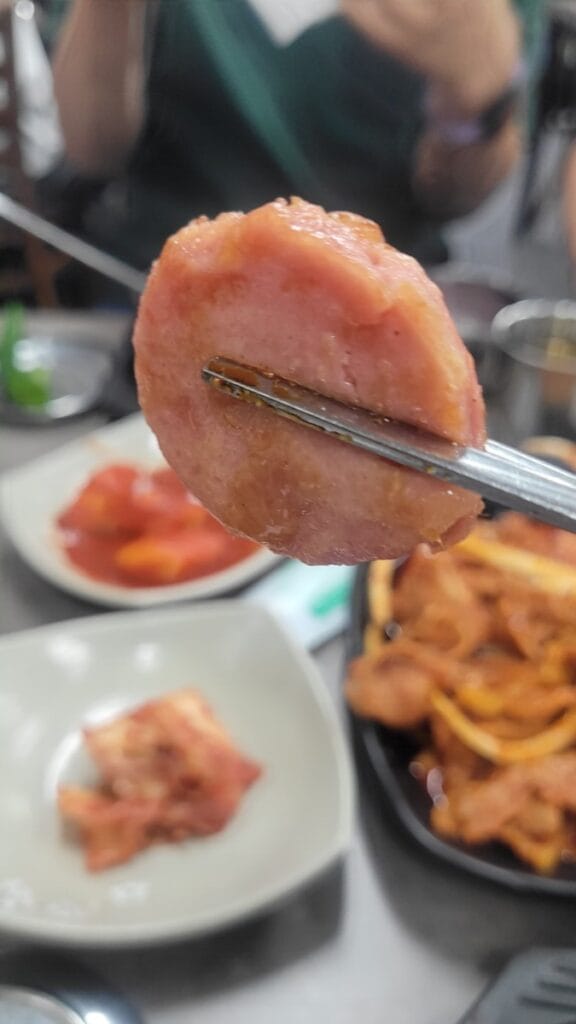
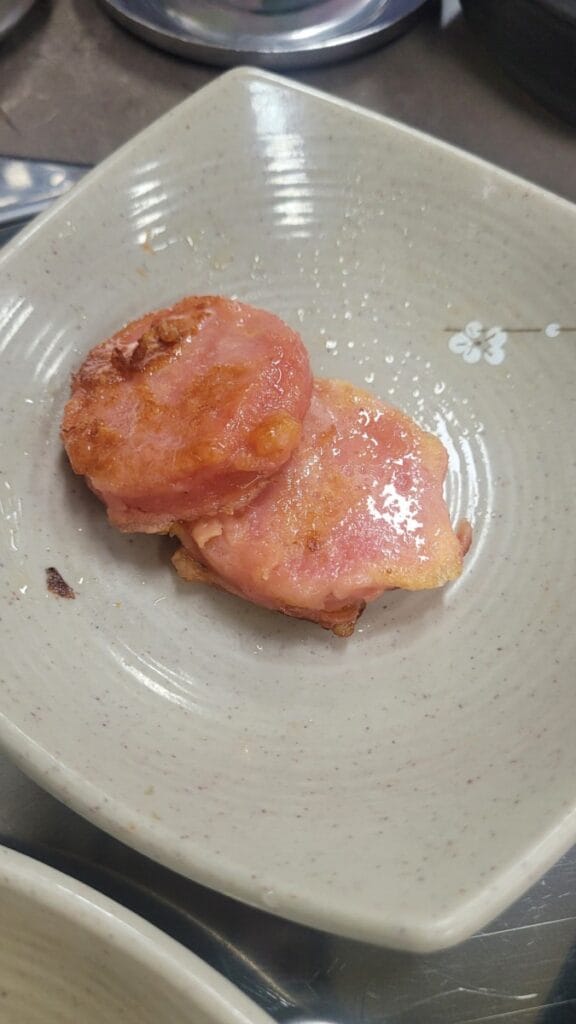
On the sausage: sliced sausage, pan-fried until the edges crisp, is a standard Korean side dish. It shows up in school lunches and packed lunchboxes and it stays on the table well into adulthood. Nobody treats it as a novelty.
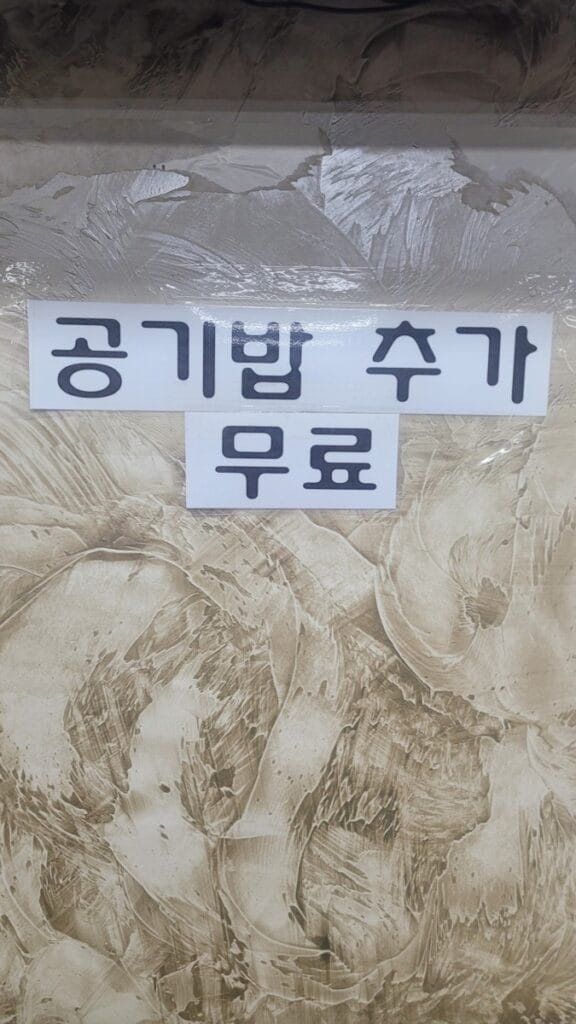
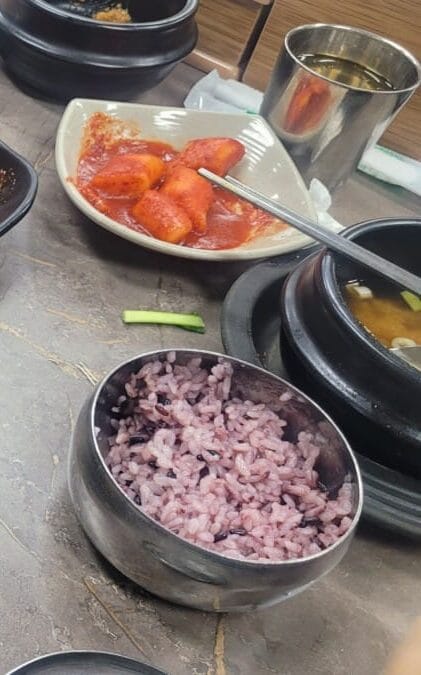
And the rice is free. Not the first bowl — all of them. Ask and another one arrives, at no charge. Free refills on a staple is not something most visitors expect, and at a place where the main dish is built to be eaten with rice, it matters.
This is what makes it a ssambap place rather than a restaurant that happens to serve lettuce.
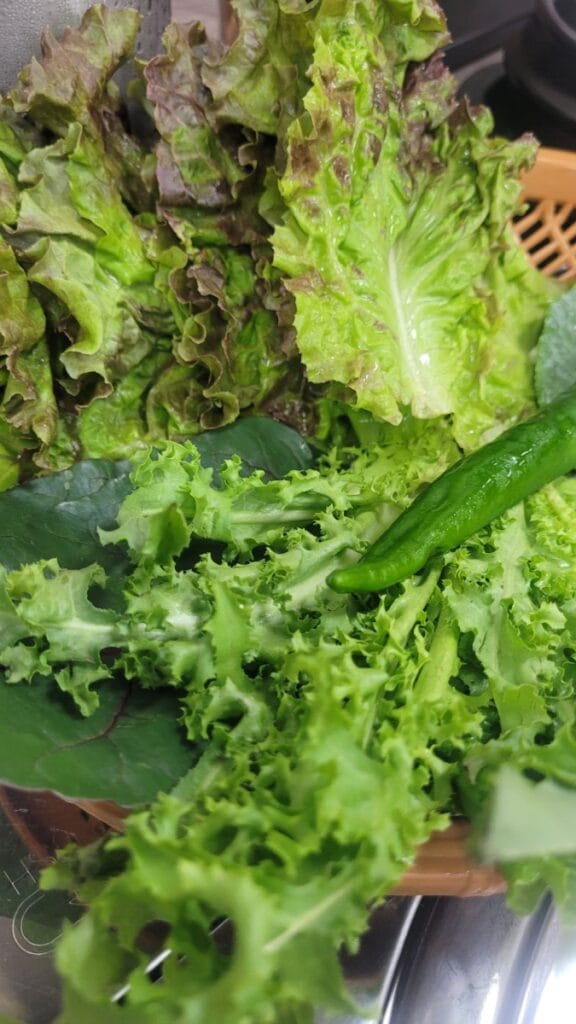
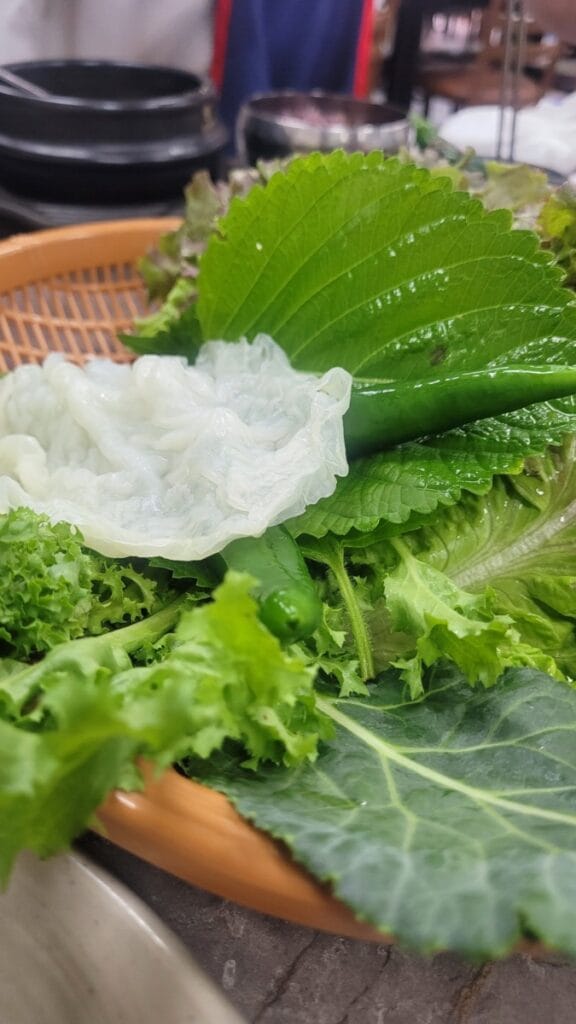
The basket arrives loaded:
- Green and red lettuce
- Perilla leaves (깻잎) — mint-adjacent, faintly anise, nothing like basil. The most Korean thing in the basket
- Kale
- Steamed cabbage — soft and sweet, the easiest one to fold
- Cheongyang chili — the hot one. Treat with respect
Having several kinds means you change the combination as you go. My own order of operations is kale, a slice of raw garlic, then the meat.
Rice comes as black rice (흑미밥) — purple-tinged, slightly nutty, pressed into a steel bowl. Better than plain white with this food.
Two pots per person
This is the detail I’d put on the sign.
At most ssambap restaurants the ssamjang comes in one small dish that everyone dips into. Here, each person gets their own earthenware pot of it. The soybean soup comes the same way — one pot each.
So there are two hot pots in front of every single person at the table.
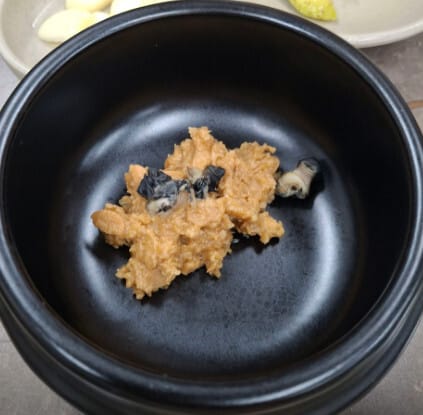
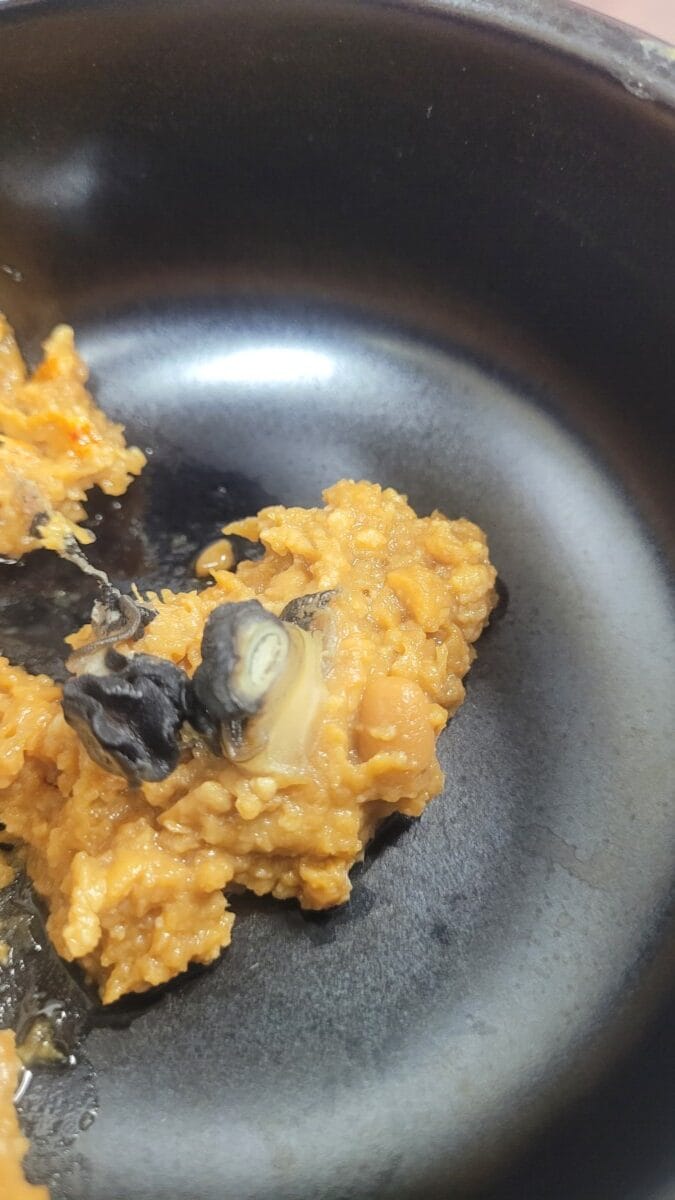
And the ssamjang has river snails in it (우렁쌈장). Small freshwater snails, cooked into the paste, giving it a chew and a mineral depth that plain ssamjang doesn’t have. It stops being a condiment and becomes a dish — you can spoon what’s left onto rice and eat it straight.
Not reaching across the table to share one dipping bowl sounds like a small thing. It changes the meal more than you’d expect.
The catch: the lunch rush
Sangam is an office district, and that creates one very specific problem.
Between roughly 12:00 and 1:30 on a weekday, every desk in the neighborhood empties at the same moment and this place fills. The wait can get long enough that you give up and eat somewhere worse.
Two windows work:
11:30–12:00 — arrive before the wave. 1:30–2:00 — after it clears. Don’t cut it fine, though: the kitchen shuts at 3.
Dinner is comfortable. The office crowd goes home and the room opens up. If you’re visiting Seoul rather than working here, come in the evening and the problem disappears.
Before you go
Closed Sundays. This is the one that catches visitors, and it isn’t specific to this restaurant. Office-district kitchens keep office hours — their customers are the people at the desks, and on Sunday those desks are empty. Whole streets in Sangam go quiet. If you’re in Seoul on a weekend, plan around it.
Closed for the major holidays too. Chuseok, the autumn harvest holiday, shuts most independent restaurants for several days, and so do the smaller national holidays. Check before you go — Naver Map lists the closure dates.
Break time, 3:00–5:00pm. Posted on the door, and enforced. I’ve walked up at 3 and been turned around. Eat before 2 or after 5.
Two-person minimum on the set meals. See above.
It’s on the second floor. Enter through the building’s mall entrance, take the stairs or lift, turn left. You’ll pass a dentist and a dry cleaner. The sign is a green circle at the end of the corridor.
📍 How to get there
Tojonggol · 토종골
Unit 205, 2F, 375 World Cup buk-ro, Mapo-gu, Seoul 서울 마포구 월드컵북로 375, DMC 205호
Nearest station Digital Media City (Line 6 · Gyeongui–Jungang · AREX), Exit 9 — 700m, about 10 min Phone +82-2-335-2310 Hours Opens 11:00 · Break 15:00–17:00 · Closed Sundays
Open in Naver Map · Google Maps
Screenshot the Korean address. Showing it to a taxi driver is faster than trying to pronounce it — and it works even with no signal.
Quick reference
- Tojonggol, Sangam — 2nd floor, unit 205. Enter through the mall entrance, turn left
- Order the jeyuk (₩12,000) or the osam (₩13,000). With two people, get both
- Set meals need two people. Solo: any of the ₩10,000 stews or the squid rice bowl
- Tteokbokki comes free as a side dish
- Ssamjang and soybean soup arrive one pot per person. The ssamjang has river snails in it
- Leaves: lettuce, perilla, kale, steamed cabbage, raw chili. Rice is black rice
- Lunch rush 12:00–1:30 is brutal. Go 11:30 or 1:30, or come for dinner
- Closed Sundays — office-district restaurants keep office hours
- Break 3–5pm. It’s enforced
- Digital Media City Station, Exit 9, about 10 minutes on foot
- Grilled cuts ₩18,000–20,000 for 180g · bossam platters ₩39,000–52,000
Korea’s best everyday restaurants are not on the street. They’re one floor up, behind a door with nothing to see through.
Learn to look up and the country opens.